

What does hand tendon surgery involve?
Tendons are the cords that transmit force from the forearm muscles to the fingers. The flexors run through the palm within a system of pulleys and close the hand; the extensors pass over the back of the hand and open the fingers. Their function depends on being able to glide freely, without friction or adhesions.
Tendon surgery covers the procedures that repair a cut or ruptured tendon, release a trapped or stuck tendon, or replace its function when it can no longer recover. It is a central part of hand surgery and its outcome depends as much on the technique as on the rehabilitation that follows.
When is it indicated?
The most frequent indications are:
- wounds involving a cut tendon, typical of cuts from knives, glass or tools on the palm or the back of the hand;
- closed ruptures, such as mallet finger, in which the extensor detaches from the last bone of the finger, or avulsion of the deep flexor when gripping forcefully;
- stiffness from adhesions after an injury, a fracture or previous surgery, when rehabilitation fails to regain movement;
- tendons trapped in their sheath, such as in trigger finger or De Quervain’s tenosynovitis, which are treated with specific release surgeries;
- ruptures from wear in rheumatoid arthritis or after a radius fracture with material rubbing against the tendon;
- paralysis or permanent loss of a tendon, where another tendon can be transferred to replace its function.
In acute cuts, repair is carried out as soon as possible, within the first few days. In closed injuries, some, such as many mallet fingers, are treated with a splint and do not need surgery. Stiffness and after-effects are only operated on once rehabilitation has exhausted its scope for improvement.
Before the procedure
Examination shows which tendon is affected and whether the cut is complete or partial: each finger has specific movements that depend on specific tendons. In wounds, sensation and circulation are also assessed, because the digital nerves and arteries run alongside the flexor tendons and are frequently injured at the same time. Ultrasound helps in doubtful cases and to locate the retracted end of the tendon; X-rays rule out associated fractures.
At the consultation, the surgical plan, the type of splint that will be used afterwards and, above all, the commitment that rehabilitation requires are explained, because this is the part of treatment that depends most on the patient.
How is it carried out?
Surgery is carried out under regional or local anaesthesia, depending on the case, and usually as day-case surgery.
- Flexor repair: the ends of the tendon, often retracted towards the palm, are located and joined with a strong, multi-strand suture that allows movement to start soon. The pulleys that hold the tendon against the bone are preserved or reconstructed. When a nerve or artery is also injured, it is repaired in the same procedure using microsurgery.
- Extensor repair: these tendons are more superficial and flat; the suture and immobilisation are adapted to the area of the back of the hand where the injury has occurred.
- Tenolysis: the tendon is released from the adhesions binding it to the surrounding tissues, and it is checked in the operating theatre itself that it glides again. When done under local anaesthesia, the patient can move the finger during the procedure.
- Tendon grafts: if the tendon is destroyed or primary repair is not possible, it is reconstructed with a tendon graft taken from the patient, in one or two stages.
- Tendon transfers: a healthy, expendable tendon is redirected to perform the function of another that has stopped working, for example after radial nerve paralysis or an irreparable rupture.
Recovery and follow-up
After surgery, the hand is protected with a splint that keeps the fingers in a position that takes tension off the suture. Over the following days, rehabilitation begins with a hand therapist, who teaches controlled mobilisation exercises so the tendon glides without rupturing. These protocols differ for flexors and extensors and are tailored to each repair.
The splint is removed gradually over the following weeks and strength returns later, once the suture has gained resistance. Heavy loading and manual work are delayed until the repair allows them. Follow-up appointments are used to monitor the scar, swelling and mobility, and to adjust the pace of the exercises.
Risks and limitations
The specific risks are rupture of the suture, which requires further surgery, and adhesions, which limit movement and sometimes require a later tenolysis. Infection, a tender scar, joint stiffness or loss of part of the finger’s extension can also occur.
A repaired tendon may not regain the full gliding of the original tendon, and in injuries within the flexor sheath, where space is tighter, recovery is more difficult. Results are better when repair is early, the technique is careful and rehabilitation is followed consistently. These points are explained clearly before surgery.
Specialist in tendon surgery in Barcelona
Dr Marta Martí Puente is a specialist in Orthopaedic Surgery and Traumatology with a focus on hand surgery, including tendon injuries and their after-effects. At her consultation in Barcelona she assesses each case, coordinates rehabilitation with the hand therapist and supports recovery through to a return to usual activity.
Frequently asked questions
Does a cut tendon heal on its own?
Why is rehabilitation so important after tendon surgery?
When will I be able to use force with my hand again?
What is a tenolysis?
Related conditions
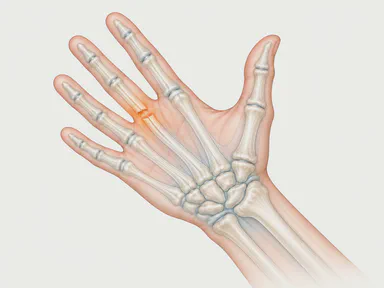
- Tendon injuries Cuts, ruptures and detachments of the tendons that move the fingers: from mallet finger to deep wounds requiring urgent repair.
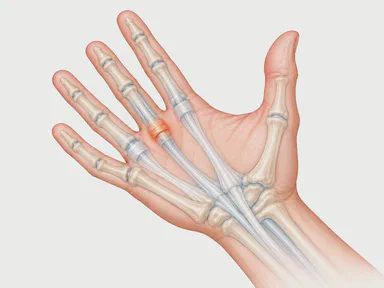
- Trigger finger Clicking, catching or locking of the finger when bending and straightening it, sometimes with a small painful lump in the palm.
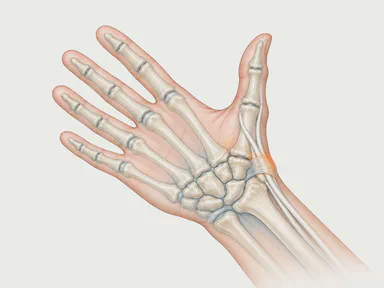
- De Quervain's Pain on the thumb side of the wrist when pinching, rotating or lifting weight, caused by irritation of the sheath around the thumb tendons.
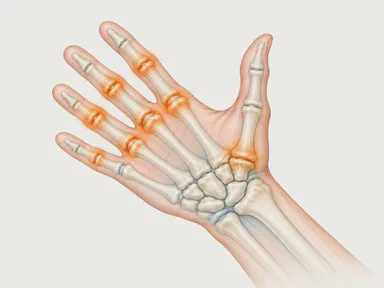
- Rheumatoid arthritis A chronic inflammatory disease affecting the joints and tendons of the hand, which can cause deformities and tendon ruptures that surgery helps to treat.
Sources and references
The information on this page is general and educational. It does not replace an individual medical assessment.
