

What does peripheral nerve surgery involve?
Peripheral nerves are the cables connecting the spinal cord to the muscles and skin. In the upper limb, the median, ulnar and radial nerves and their branches carry sensation from the hand and control finger movement. When a nerve is compressed, cut or injured, tingling, loss of sensation, weakness or pain appear.
Peripheral nerve surgery covers the procedures that treat these problems: releasing a compressed nerve, repairing a cut nerve, reconstructing a lost segment with a graft, or treating a painful neuroma. Many of these techniques require a microscope and form part of hand microsurgery.
When is it indicated?
The most frequent situations are:
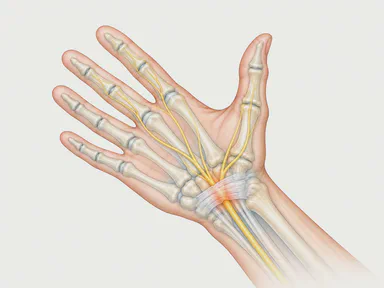
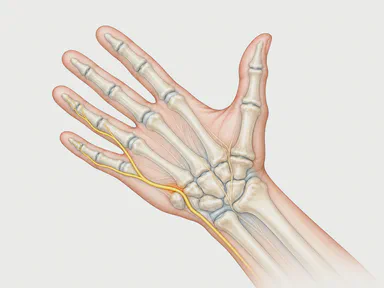
- nerve compressions that do not improve with conservative treatment, such as carpal tunnel syndrome, compression of the ulnar nerve in Guyon’s canal or at the elbow, or compression of branches of the radial nerve;
- wounds involving a cut nerve, producing loss of sensation in a specific area or paralysis of certain muscles;
- closed injuries from traction or bruising that show no signs of recovery over the following months;
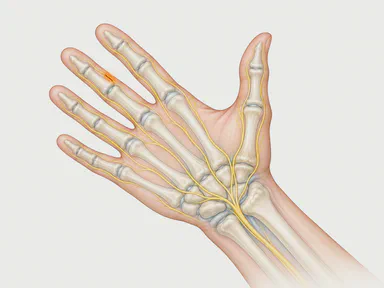
- painful neuromas after a wound, an amputation or previous surgery;
- after-effects of previous repairs that have not progressed well.
In compressions, surgery is proposed after splints, activity modification or injection have been tried where appropriate, and when symptoms are persistent or there are signs of nerve damage. In nerve cuts, on the other hand, early repair offers better prospects and should not be delayed.
Before the procedure
Diagnosis is based on examination: the distribution of sensory loss, the strength of each muscle, Tinel’s sign along the course of the nerve and provocative manoeuvres. The electromyogram confirms which nerve is affected, at what level and with what severity, and serves as a reference for comparing progress. Ultrasound and MRI help locate the point of injury or compression and rule out masses.
At the consultation, what can be expected from surgery and over what timescale is explained. It is important to understand that relief of pain and tingling can be rapid after decompressions, but that recovery of sensation and strength after a nerve suture is measured in months.
How is it carried out?
The technique depends on the problem:
- Decompression: the structure compressing the nerve is opened, such as the transverse carpal ligament in carpal tunnel release or the roof of Guyon’s canal, to give it back space. It is usually done under local or regional anaesthesia, as day-case surgery.
- Neurolysis: the nerve is released from the adhesions and scar tissue surrounding it, often after a previous injury or surgery.
- Nerve suture: in clean cuts, the ends are joined under the microscope with very fine sutures, aligning the fascicles.
- Nerve graft: when a segment is missing and the ends cannot be joined without tension, a fragment of a less important sensory nerve, taken from the patient themselves, or a conduit that guides the growth of the fibres, is interposed.
- Treatment of a neuroma: the painful thickening is removed and the nerve is reconnected to its distal end where one exists, or relocated inside a muscle or bone so that it is protected.
Recovery and follow-up
After a decompression, the hand moves from the first day and wound discomfort improves within a few weeks. After a suture or a graft, it is immobilised with a splint for a few weeks to protect the repair, and then rehabilitation begins with a hand therapist: mobilisation, scar management, protection of insensate skin and sensory re-education.
Nerve recovery is slow. The fibres grow at about one millimetre a day from the point of repair, so a nerve sutured at the wrist takes many months to reach the fingertips. During this time it is normal to notice tingling, shock-like sensations or strange feelings, which usually indicate the nerve is advancing. Follow-up at the consultation and, where useful, a check electromyogram allow progress to be monitored.
Risks and limitations
General risks include infection, haematoma, a tender scar and stiffness. Those specific to this surgery are injury to small nerve branches, recurrence of a compression due to new scarring, and formation of a neuroma.
The main limitation is that surgery creates the conditions for the nerve to recover, but does not guarantee the outcome. Regeneration depends on age, the nerve affected, the level and type of injury, the time that has passed and the quality of the repair. In long-standing compressions with muscle wasting, some of the damage can be irreversible. In high nerve cuts, motor recovery can be incomplete. All of this is explained before the procedure so the decision is made with realistic expectations.
Specialist in peripheral nerve surgery in Barcelona
Dr Marta Martí Puente is a specialist in Orthopaedic Surgery and Traumatology with a focus on the hand, the wrist and microsurgery, including surgery of the peripheral nerves of the upper limb. At her consultation in Barcelona she studies each case with the examination and tests needed and proposes the treatment, conservative or surgical, best suited to each person.
Frequently asked questions
Can a cut nerve recover without surgery?
Why does a nerve take so long to recover?
Does surgery always get rid of the tingling?
What is a neuroma and how is it treated?
Related conditions
- Carpal tunnel Night-time tingling, numbness in the fingers and loss of strength caused by compression of the median nerve at the wrist.
- Guyon's canal Tingling in the ring and little fingers and loss of hand strength caused by compression of the ulnar nerve at the wrist.
- Nerve injuries Section, compression or neuroma of the median, ulnar, radial or digital nerves, with loss of sensation or strength that may require microsurgery.
Sources and references
The information on this page is general and educational. It does not replace an individual medical assessment.
