

What does surgical treatment of hand and wrist fractures involve?
A fracture heals when the bone fragments are held in a correct and stable position for long enough. In many hand and wrist fractures, this is achieved with a cast or a splint. When the position is not acceptable, cannot be maintained, or the fracture affects the joint, the fragments need to be repositioned and fixed with osteosynthesis material: plates, screws, wires or an external fixator.
The aim of surgery is not only for the bone to heal, but for it to do so in the right position so that the wrist and fingers regain mobility and strength. It is a fundamental part of wrist surgery and of hand surgery, both as an emergency and as planned surgery.
When is it indicated?
The decision between a cast and surgery depends on the type of fracture, the displacement, the stability, age and each person’s needs. As general guidance:
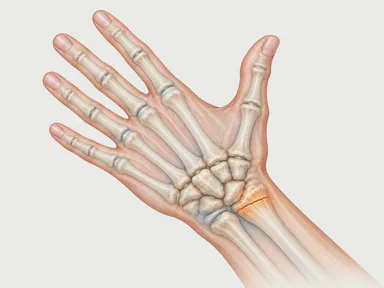
- in distal radius fracture, surgery is performed when there is displacement or tilting that is not corrected by reduction, when the fracture is unstable and displaces again inside the cast, or when it affects the joint surface with steps;
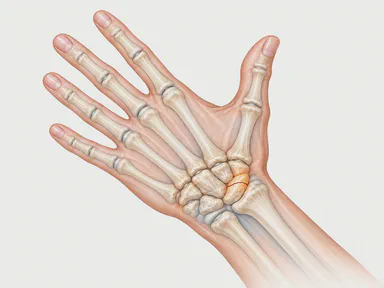
- in scaphoid fracture, surgery is indicated in displaced fractures, in those of the proximal pole, which have a poorer blood supply, and in those that fail to heal after cast treatment; in some non-displaced fractures, screw fixation is offered to shorten immobilisation, particularly in active people;
- in metacarpal and phalangeal fractures, surgery is performed when there is rotation of the finger, significant shortening or angulation, displaced joint fractures, open fractures or several fractures at once;
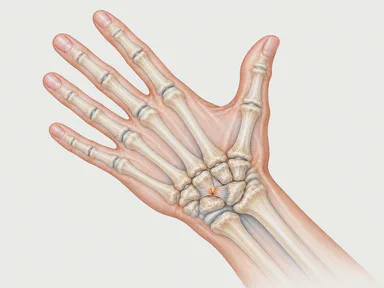
- in fracture-dislocations and in fractures with an associated ligament injury, surgery allows both injuries to be treated;
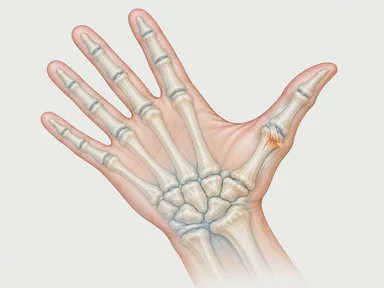
- in a thumb sprain with a displaced bony avulsion, the fragment is fixed and the ligament is repaired.
Before the procedure
X-rays are the basis of diagnosis. A CT scan helps assess joint fractures and plan fixation, and MRI or arthroscopy itself can detect ligament injuries that often accompany wrist fractures.
If surgery is urgent, the hand is immobilised and kept elevated until theatre. If it is planned, pre-operative assessment and the anaesthesia visit are completed in the days beforehand. At the consultation, the type of fixation planned, the immobilisation afterwards and the approximate recovery timescale are explained, which depend on the fracture and on the work or sport you do.
How is it carried out?
The procedure is carried out under regional anaesthesia of the arm or general anaesthesia, and in many cases as day-case surgery. The technique is adapted to each fracture:
- Plates and screws: in the distal radius, the plate is usually placed on the palmar surface of the bone, through an incision in the forearm, and holds the fragments stably; this allows the wrist to start moving soon. Smaller plates and screws are used in the metacarpals and phalanges.
- Screws: the scaphoid is fixed with a screw introduced along the length of the bone, often percutaneously through a minimal incision when the fracture is not displaced.
- Kirschner wires: these are thin wires that pass through the fragments and hold them aligned; they are placed through the skin, removed at the consultation after a few weeks, and require additional immobilisation.
- External fixator: in very comminuted or open fractures, or with significant soft-tissue injury, the bone is stabilised from outside with bars and pins, on a temporary basis.
- Arthroscopic assistance: in some joint fractures, the camera is used to check that the joint surface is well reduced.
Recovery and follow-up
After surgery, the hand is kept elevated to reduce swelling and the fingers are mobilised from the first day, unless the fixation prevents this. Subsequent immobilisation depends on the technique: a stable plate allows a short splint and early mobilisation; wires require a cast until they are removed.
Follow-up X-rays confirm that the fracture maintains its position and heals, generally over the following six to eight weeks, with longer timescales in the scaphoid. Rehabilitation with a hand therapist helps regain mobility, control swelling and build strength gradually. Return to work depends on the activity, and loading and contact sport are delayed until the bone has healed.
Risks and limitations
In addition to infection and healing problems, the risks specific to this surgery are stiffness, irritation of the tendons by the material, injury to sensory nerve branches, loss of reduction, delayed healing or nonunion, especially in the scaphoid, and complex regional pain syndrome, which is uncommon but requires early treatment.
Osteosynthesis material usually remains in place permanently. Its removal is considered when it causes discomfort, when it rubs against a tendon or when a complication appears, usually after a year. When a fracture affects the joint, even if the reduction is correct, osteoarthritis can develop over time. And in complex fractures it is realistic to accept that the wrist may not regain exactly its previous mobility. All of this is explained before surgery.
Specialist in hand and wrist fracture surgery in Barcelona
Dr Marta Martí Puente is a specialist in Orthopaedic Surgery and Traumatology with a focus on wrist surgery and the hand, and treats fractures of this region both as emergencies and as planned surgery. At her consultation in Barcelona she assesses whether a fracture can be treated with a cast or needs fixation, and supports recovery through to a return to activity.
Frequently asked questions
Do all wrist fractures need an operation?
Does the plate need to be removed afterwards?
How long does a fracture take to heal?
Why does the hand become stiff after a fracture?
Related conditions
- Distal radius fracture The most common wrist fracture: it occurs on falling onto an outstretched hand and can be treated with a cast or with surgery depending on the displacement.
- Scaphoid fracture A fracture of the most vulnerable bone in the wrist: often not seen on the first X-ray, and if it fails to heal, it can lead to nonunion.
- Thumb sprain Pain and instability at the base of the thumb after a fall or sudden pull, caused by injury to the ulnar collateral ligament of the metacarpophalangeal joint.
- Wrist ligaments Sprains and ruptures of the ligaments joining the carpal bones, especially the scapholunate ligament, which can destabilise the wrist and lead to osteoarthritis.
Sources and references
The information on this page is general and educational. It does not replace an individual medical assessment.
