

What does trigger finger surgery involve?
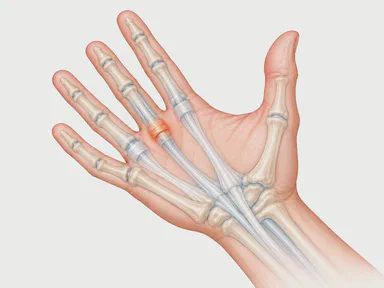
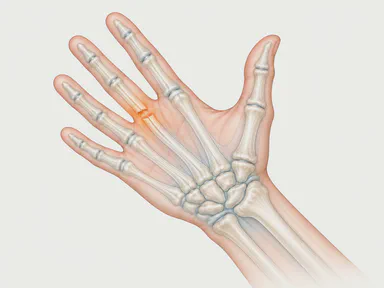
Trigger finger occurs when the flexor tendon of a finger fails to glide freely through the A1 pulley, a fibrous ring at the base of the finger, in the palm. The tendon thickens or the pulley narrows, and the tendon becomes trapped on bending: the finger locks and then snaps suddenly on straightening, with pain at the base of the finger. In advanced cases it can become locked in a bent position.
Trigger finger surgery consists of opening the A1 pulley so the tendon can glide again without friction. When there is also a pulley cyst, a small lump arising from the tendon sheath in the same area, it can be removed in the same procedure. It is one of the most frequent and most straightforward procedures in hand surgery, within tendon surgery.
When is it indicated?
Treatment almost always begins with conservative measures: reducing the activities that trigger the catching, a splint keeping the finger extended, especially at night, and a corticosteroid injection into the tendon sheath, which relieves symptoms in a significant proportion of cases. Surgery is considered when:
- the clicking, catching or pain persists despite these measures;
- the injection gives only partial or temporary improvement and symptoms return;
- the finger becomes locked in a bent position and cannot be straightened;
- several fingers are affected, or the problem is associated with diabetes, in which case injections tend to be less effective.
In trigger finger in children, which mainly affects the thumb, treatment has its own particularities and is assessed separately.
Before the procedure
Clinical examination is usually enough to confirm the diagnosis: the pain and thickening at the base of the finger are located and the catching is reproduced. If there is a palpable lump, ultrasound helps distinguish a pulley cyst from other benign lesions of the hand and assess the state of the tendon. Other causes of finger locking, such as Dupuytren’s contracture or a joint injury, are also ruled out.
As the procedure is carried out under local anaesthesia, fasting is not necessary, nor is it necessary to stop most regular medication. It is worth reporting the medication you take and conditions such as diabetes, which affect healing.
How is it carried out?
Release of the A1 pulley is carried out as day-case surgery with local anaesthesia infiltrated into the palm, often using the WALANT technique, which uses local anaesthetic with adrenaline and avoids a tourniquet. Through a small incision in the palm, at the base of the finger, the A1 pulley is identified and divided along its full length, protecting the digital nerves and arteries that run on either side. The tendon is checked to glide without obstruction by asking you to bend and straighten the finger in the operating theatre itself.
If there is a pulley cyst, it is removed in the same procedure along with the part of the sheath it arises from, to reduce local pain and prevent the lump from returning. In some cases, with favourable anatomy, the pulley can be divided percutaneously with a needle, without an incision, within minimally invasive surgery; the choice of technique is discussed at the consultation.
The skin is closed with a few stitches and a light dressing is applied, leaving the fingers free.
Recovery and follow-up
Moving the fingers from the same day is recommended to avoid stiffness and to keep the tendon gliding. Improvement of the catching is usually immediate. Light activities are resumed within a few days; the stitches are removed at around two weeks, and discomfort on pressing over the scar can last a few more weeks.
Grip strength recovers gradually as swelling decreases. During the first few weeks, it is worth taking care of wound hygiene, massaging the scar once it has healed and adapting loads. Rehabilitation is usually not needed, except in fingers that had been locked for a long time or in people with pre-existing stiffness, in which case a hand therapist helps regain range of motion. Follow-up at the consultation confirms full recovery.
Risks and limitations
Complications are infrequent, but infection, a tender scar, discomfort when resting on the palm, finger stiffness and, exceptionally, injury to a digital nerve with loss of sensation on one side of the finger, or to a digital artery, can occur. Incomplete release can leave a residual catching, and a very thickened tendon may need an additional step on its sheath.
As for its limits, surgery resolves the mechanical catching, but a finger that has been locked in a bent position for a long time can have developed joint stiffness that takes time to recover. Other fingers can be affected in future, because surgery treats the finger operated on and not the tendency to develop the problem, which is more frequent in people with diabetes or rheumatoid arthritis. All of this is discussed before the procedure.
Specialist in trigger finger surgery in Barcelona
Dr Marta Martí Puente is a specialist in Orthopaedic Surgery and Traumatology with a focus on hand surgery. At her consultation in Barcelona she assesses each case of trigger finger or pulley cyst, proposes conservative treatment first when appropriate and, if surgery is indicated, carries it out as day-case surgery under local anaesthesia.
Frequently asked questions
Does trigger finger always need surgery?
How long does the procedure take and what anaesthesia is used?
When will I be able to use my hand afterwards?
What is a pulley cyst?
Related conditions
Sources and references
The information on this page is general and educational. It does not replace an individual medical assessment.
