

What does surgery for De Quervain’s tenosynovitis involve?
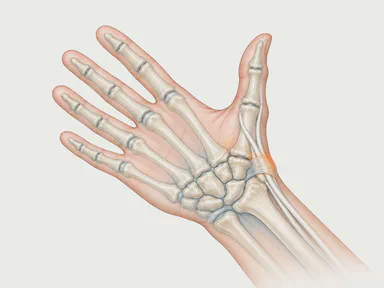
De Quervain’s tenosynovitis is inflammation of the sheath surrounding two thumb tendons, the abductor pollicis longus and the extensor pollicis brevis, as they pass through the first extensor compartment, a tunnel on the thumb side of the wrist. When the sheath thickens, the tendons rub as they move and pain appears at the base of the thumb, worsening on gripping, rotating the wrist or lifting weight.
De Quervain’s surgery consists of opening the roof of that compartment so the tendons can glide again without friction. It is a short, day-case procedure within hand surgery, reserved for cases that do not improve with conservative treatment.
When is it indicated?
Initial treatment is conservative and works in many cases:
- relative rest and modifying the movements that trigger pain, such as lifting the baby with the wrist bent sideways;
- a splint immobilising the thumb and wrist;
- anti-inflammatory medication for short periods, if indicated;
- corticosteroid injection into the first compartment, which relieves pain for a lasting period in many people.
Surgery is considered when the pain persists for weeks or months despite well-conducted conservative treatment, when it returns after one or two injections, or when it clearly limits daily, work or sporting activity. In tenosynovitis that appears during pregnancy or breastfeeding, symptoms tend to improve over time and surgery is rarely indicated.
Before the procedure
At the consultation, the location of the pain over the first compartment is confirmed and reproduced with manoeuvres such as Finkelstein’s test, which stretches the tendons by bending the wrist sideways. It is important to distinguish it from other causes of pain in the same area, especially thumb base arthritis, which can coexist, and an old scaphoid fracture. Ultrasound shows thickening of the sheath, checks for a septum dividing the compartment into two tunnels, which is common, and rules out other injuries. X-rays help assess the joint at the base of the thumb.
As the procedure is carried out under local anaesthesia, fasting is not necessary. It is worth reporting the medication you take and any allergies.
How is it carried out?
Release of the first extensor compartment is carried out as day-case surgery under local anaesthesia, often using the WALANT technique, which uses local anaesthetic with adrenaline and avoids a tourniquet. A small incision is made on the radial side of the wrist, over the compartment. The first step is to identify and protect the sensory branches of the radial nerve, which run directly beneath the skin in that area and are the structure requiring the most care in this surgery.
The roof of the compartment is then opened along the tendons. It is essential to check whether there is a septum separating the abductor pollicis longus from the extensor pollicis brevis and to release both tunnels, because a subdivided compartment released only in part is a known cause of persistent pain. Both tendons are checked to glide freely by asking you to move the thumb, and the skin is closed with a few stitches. A light dressing is applied, without the need for immobilisation except in specific cases.
Recovery and follow-up
Gentle movements of the thumb and wrist begin from the first day, and the hand is kept elevated for the first few days to reduce swelling. Dressings are changed at the consultation and the stitches are removed at around two weeks. Most people regain everyday movements quickly; pinching, lifting and caring for the baby are resumed gradually, and full strength can take several weeks.
The scar, in an area of thin skin, can be tender for a time; massaging the scar once it has healed helps it to mature. Rehabilitation is not usually necessary, except if there is stiffness or persistent pain. Follow-up allows the scarring, the sensation on the back of the thumb and the progress of the pain to be monitored, and the return to manual work and sport to be adjusted.
Risks and limitations
The most characteristic complication is irritation or injury to the sensory branches of the radial nerve, which can cause tingling, numbness or pain on the back of the thumb and hand; in most cases it is temporary, but it can persist. Other possible complications are infection, a painful or adherent scar, persistent pain from incomplete release, especially when an unrecognised septum is present, and, rarely, subluxation of the tendons out of their groove when moving the wrist.
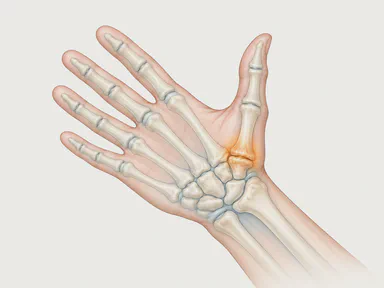
As for its limits, surgery treats the friction of the tendons, but not other problems that can cause pain in the same area, such as thumb base arthritis. When both coexist, part of the pain can persist after release, which is why prior diagnosis is so important. These points are explained before deciding on the procedure.
Specialist in De Quervain’s surgery in Barcelona
Dr Marta Martí Puente is a specialist in Orthopaedic Surgery and Traumatology with a focus on hand surgery and the wrist. At her consultation in Barcelona she assesses each case of De Quervain’s tenosynovitis, proposes conservative treatment first and, when surgery is indicated, carries it out as day-case surgery under local anaesthesia.
Frequently asked questions
Do I need an injection before surgery for De Quervain's tenosynovitis?
Is it day-case surgery?
Can the skin be left numb after the operation?
When will I be able to lift weight or pick up my baby again?
Related conditions
Sources and references
The information on this page is general and educational. It does not replace an individual medical assessment.
