

What is carpal tunnel syndrome?
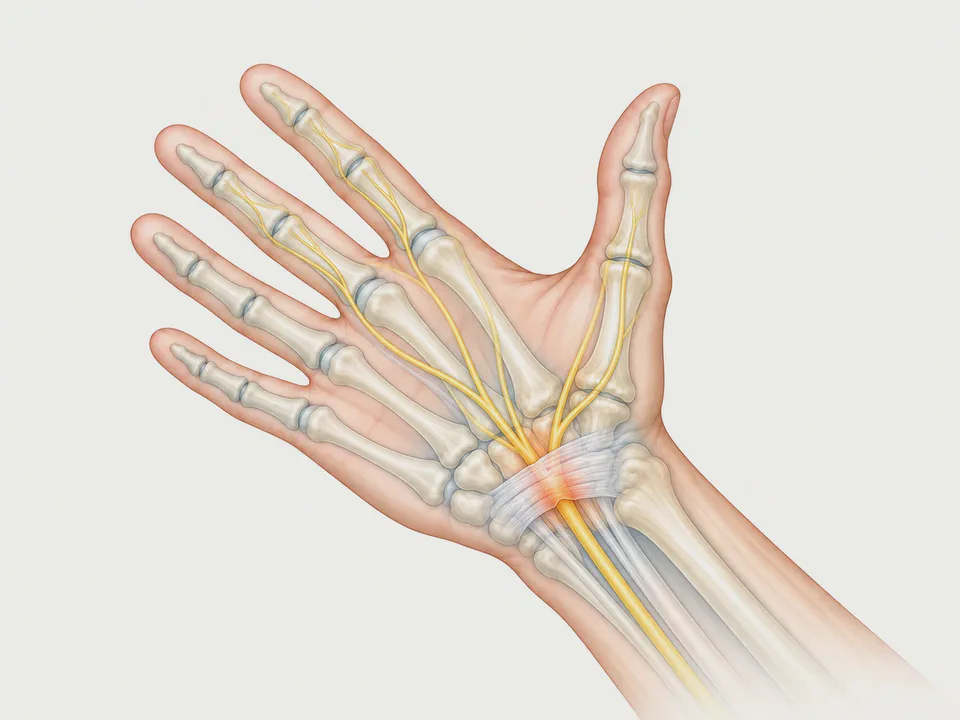
Carpal tunnel syndrome appears when the median nerve is compressed as it passes through the wrist. The carpal tunnel is a narrow space on the palm side of the wrist, bounded by the carpal bones and the transverse ligament. The median nerve and the flexor tendons of the fingers pass through it. When the space narrows or its contents increase in volume, the nerve becomes irritated and stops working normally.
It is the most common nerve compression of the upper limb. At first it usually appears intermittently, especially at night, but over time it can affect movements as simple as holding a mobile phone, doing up a button, or driving.
Symptoms
Tingling and numbness
The most characteristic symptom is tingling or numbness in the thumb, index finger, middle finger and half of the ring finger. Many people wake up at night with the hand asleep and feel the need to shake it for relief.
Night-time pain and a clumsy hand
Pain can appear in the wrist or radiate towards the forearm. In more advanced stages, clumsiness is noticed when pinching, opening jars, or holding small objects, and dropping things is not unusual.
Loss of strength and sensation
As the compression progresses, the strength of the thumb decreases and the muscle at its base can waste away. Sensation in the fingers becomes less precise. These signs indicate the nerve has been affected for some time, and assessment should not be delayed.
Causes and risk factors
There is not always a single cause. Several factors are often involved:
- repetitive movements of the hand and wrist, or sustained postures in flexion;
- inflammation of the flexor tendons;
- fluid retention, for example during pregnancy;
- conditions such as diabetes, hypothyroidism or rheumatoid arthritis;
- after-effects of a distal radius fracture or another wrist injury;
- an anatomical predisposition, with a narrower than usual tunnel.
It is more common in women and between the ages of 40 and 60, although it can appear at any age.
Diagnosis
Diagnosis is based mainly on the clinical history and examination. The distribution of symptoms, their course, and certain provocative manoeuvres, such as Tinel’s sign or Phalen’s test, provide strong guidance for the diagnosis.
Depending on the case, an electromyogram is requested to confirm involvement of the median nerve and grade its severity, which is especially useful when surgery is being considered. Ultrasound allows the thickness of the nerve to be assessed and rules out other causes of pain or a mass at the wrist, such as a ganglion cyst.
Treatment
In mild cases or those of short duration, treatment usually starts with conservative measures:
- a night splint with the wrist in a neutral position;
- adapting the activities that trigger the symptoms;
- anti-inflammatory medication for short periods, if indicated;
- corticosteroid injection into the carpal tunnel, which can relieve symptoms for weeks or months and helps confirm the diagnosis.
These measures are assessed individually. Carpal tunnel syndrome related to pregnancy, for example, tends to improve after delivery and rarely requires surgery.
When is surgery necessary?
Surgery is considered when:
- symptoms are daily or repeatedly wake the person at night;
- conservative treatment has not given stable relief;
- there is loss of strength, muscle wasting, or loss of sensation;
- the electromyogram shows moderate or severe compression.
In these cases, waiting too long can make nerve damage harder to recover from. The decision is always based on symptoms, examination, test results, and each person’s needs.
Carpal tunnel surgery
The procedure is called carpal tunnel release. It involves dividing the transverse carpal ligament to give the median nerve more space. It is usually carried out on an outpatient basis, with local or regional anaesthesia, through a small incision in the palm. It is one of the most common procedures in hand surgery and forms part of peripheral nerve surgery.
Recovery
After the operation, the fingers are mobilised from the first day and dressings are changed periodically until the stitches are removed, at around two weeks. Night-time tingling usually improves soon. The scar can be tender for a few weeks, and grip strength recovers progressively. In long-standing compressions, recovery of sensation can be slower or incomplete, something that is explained before surgery.
Specialist in carpal tunnel syndrome in Barcelona
Dr Marta Martí Puente is a specialist in Orthopaedic Surgery and Traumatology with a focus on hand and wrist surgery and peripheral nerves. At her consultation in Barcelona she assesses each case of carpal tunnel syndrome individually, from conservative measures through to surgery when indicated, and supports recovery through to a return to usual activity.
Frequently asked questions
Does carpal tunnel syndrome heal on its own?
Is carpal tunnel surgery always necessary?
How long does recovery take after carpal tunnel release?
What tests do I need before the visit?
Could it be something other than carpal tunnel syndrome?
Related conditions
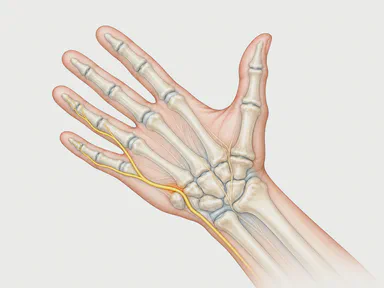
- Guyon's canal Tingling in the ring and little fingers and loss of hand strength caused by compression of the ulnar nerve at the wrist.
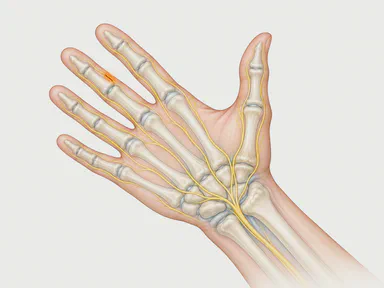
- Nerve injuries Section, compression or neuroma of the median, ulnar, radial or digital nerves, with loss of sensation or strength that may require microsurgery.
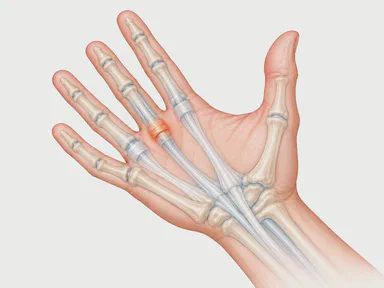
- Trigger finger Clicking, catching or locking of the finger when bending and straightening it, sometimes with a small painful lump in the palm.
Sources and references
The information on this page is general and educational. It does not replace an individual medical assessment.
