

What is De Quervain’s tenosynovitis?
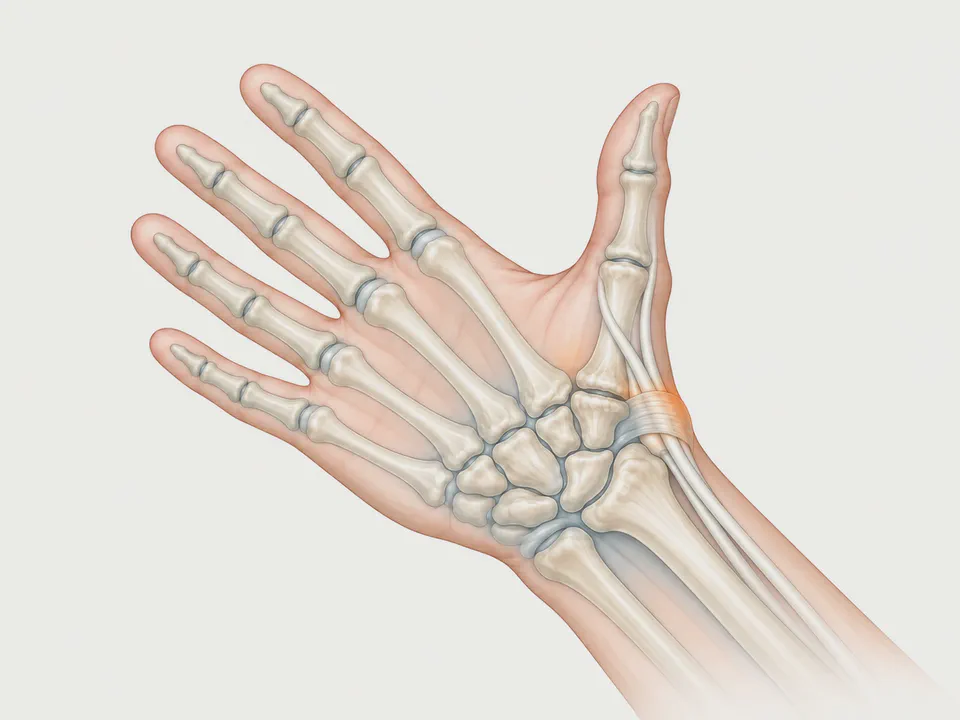
De Quervain’s tenosynovitis is the irritation of the sheath surrounding two tendons of the thumb, the abductor longus and the extensor brevis, as they pass through the first extensor compartment, a narrow tunnel on the thumb side of the wrist. When the sheath thickens, the tendons glide less easily and pain, tenderness and reduced function appear when moving the thumb and wrist.
It is a very common condition in people who repeat pinching movements, deviate the wrist frequently, or perform tasks involved in caring for a baby, to the point that it is popularly known as “mother’s wrist”. It can also appear without a clearly identifiable cause.
Symptoms
Pain at the base of the thumb
The main symptom is a localised pain on the thumb side of the wrist, a few centimetres above the joint at the base of the thumb. It can radiate towards the forearm or the thumb, and worsens when picking up objects, opening jars, wringing out a cloth, or turning a key.
Local tenderness and swelling
The area is tender to the touch and sometimes somewhat swollen. Some people notice clicking, friction, or a catching sensation when moving the thumb.
Difficulty with everyday movements
Activities such as lifting a baby from under the armpits, using a mobile phone, holding a frying pan, or writing become especially troublesome, and some weakness when pinching, caused by the pain itself, is not unusual.
Causes and risk factors
The problem is usually related to mechanical overload from repeated movements of the wrist and thumb. It is more common in women, between the ages of 30 and 50, and appears frequently during pregnancy and the postpartum period, due to hormonal changes and the repeated load of lifting a baby. Other factors are repetitive manual activities, intensive use of a mobile phone, some racquet sports, and inflammatory diseases such as rheumatoid arthritis.
Rather than looking for a single cause, what matters is identifying the movements that irritate the area and assessing how long the symptoms have been present.
Diagnosis
Diagnosis is based on the clinical history and examination. At the consultation, the painful point over the first compartment is located, and manoeuvres that reproduce the pain are carried out, such as the Finkelstein test, in which the thumb is tucked inside a closed fist and the wrist is deviated towards the little finger.
In some cases, ultrasound is useful to confirm thickening of the sheath, check whether the compartment has a septum separating the two tendons — which is relevant if injection or surgery is considered — and to rule out other causes of pain in the same area, such as thumb base arthritis. If osteoarthritis is suspected, an X-ray is requested. Other causes of pain in this area worth considering are wrist osteoarthritis, an old scaphoid fracture, or intersection syndrome, which hurts a little further up, in the forearm.
Treatment
Initial treatment is conservative and is sufficient for many people:
- relative rest from the movements that trigger the pain, and adapting how the baby is lifted or objects are held;
- a splint immobilising the thumb and wrist, for a few weeks, especially during the most demanding activities;
- anti-inflammatory medication for short periods, if indicated;
- corticosteroid injection into the tendon sheath, which is usually the most effective treatment when the splint is not enough, and in many cases resolves the episode.
During the postpartum period it is worth reviewing how the baby is picked up: lifting with the palms facing upward and the forearm beneath the baby’s body, rather than with the thumb held apart, reduces the load on the tendons. Symptoms from this stage tend to improve over time, but there is no need to put up with months of pain when simple, effective treatments exist.
When is surgery necessary?
Surgery is considered when the pain persists or returns despite a splint and one or two injections, when it clearly limits work or caring for children, or when there is a septum within the compartment that prevents the injection from reaching both tendons. Surgery is not performed for an isolated episode that responds well to conservative treatment.
De Quervain’s surgery
De Quervain’s surgery involves opening the roof of the first extensor compartment so the tendons can glide again without friction, also releasing the internal septum when present. It is carried out through a small incision on the side of the wrist, with local or regional anaesthesia, as day surgery. During the procedure, the sensory branches of the radial nerve, which run just beneath the skin in this area, are identified and protected, which avoids one of the most troublesome complications of this surgery. It is a standard tendon surgery technique of the hand.
Recovery
After the operation a soft dressing is worn for a few days, and the fingers and thumb are moved from the first day. Stitches are removed at around two weeks. The pain that led to surgery usually disappears soon, although the scar can be tender for a few weeks. Weight-bearing is resumed progressively from the second or third week, and most people regain full activity within a few weeks. During the first few months, an area of altered sensation around the scar can be noticeable, which usually normalises spontaneously.
Specialist in De Quervain’s tenosynovitis in Barcelona
Dr Marta Martí Puente is a specialist in Orthopaedic Surgery and Traumatology with a focus on hand surgery and the wrist. At her consultation in Barcelona she distinguishes De Quervain’s tenosynovitis from other causes of thumb-sided pain, prescribes the treatment suited to each stage, and performs release surgery when indicated.
Frequently asked questions
Does De Quervain's tenosynovitis heal on its own?
Can I have De Quervain's and thumb base arthritis at the same time?
Is the injection painful, and does it work?
What does De Quervain's surgery involve?
When will I be able to pick up my baby again after the operation?
Related conditions
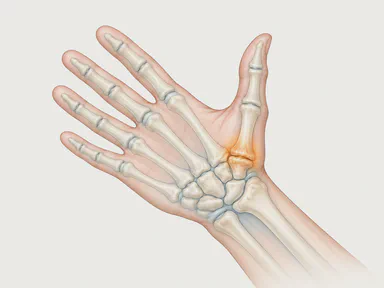
- Thumb base arthritis Pain and loss of strength at the base of the thumb caused by wear of the trapeziometacarpal joint.
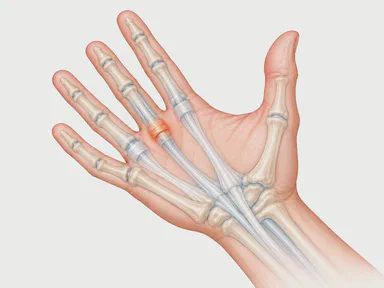
- Trigger finger Clicking, catching or locking of the finger when bending and straightening it, sometimes with a small painful lump in the palm.
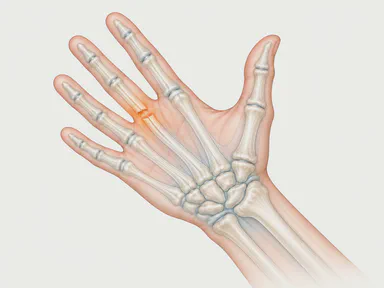
- Tendon injuries Cuts, ruptures and detachments of the tendons that move the fingers: from mallet finger to deep wounds requiring urgent repair.
Sources and references
The information on this page is general and educational. It does not replace an individual medical assessment.
