

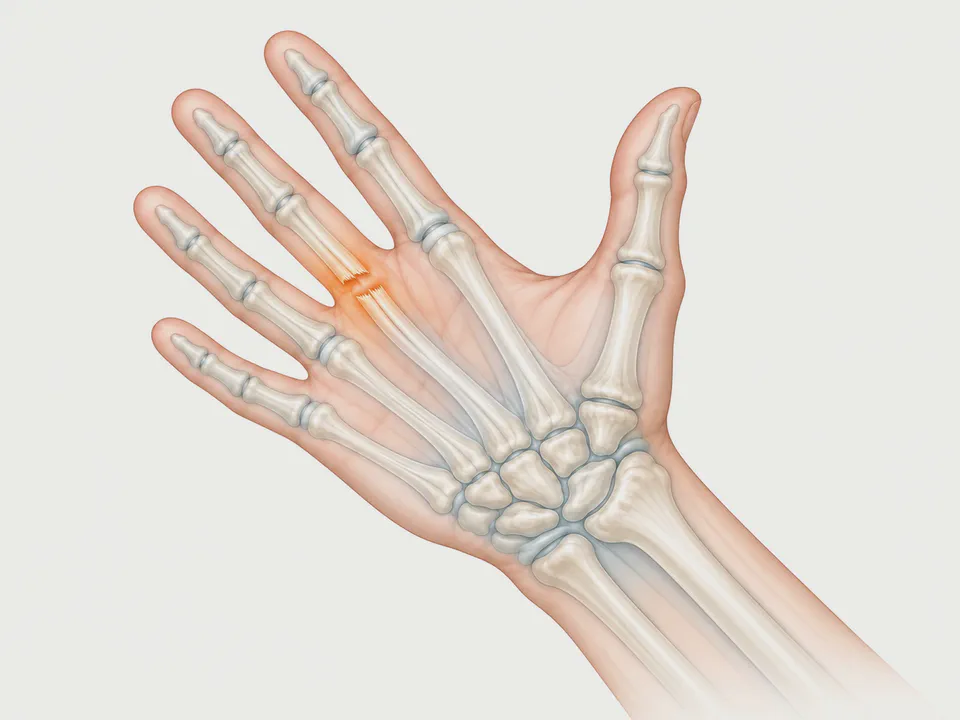
What are tendon injuries of the hand?
Tendons are the cords that transmit force from the forearm muscles to the fingers. The flexors run along the palm side and close the hand; the extensors run along the back and open it. They lie very close to the skin, especially in the fingers and palm, so a cut that looks superficial can sever them. They can also rupture without a wound, from a sudden pull or from continuous friction against a bone or a plate.
A tendon injury results in total or partial loss of the ability to move a finger. Unlike other tissues, the ends of a cut tendon separate and do not rejoin on their own, so most complete sections require surgery. The speed of diagnosis and the quality of subsequent rehabilitation affect the outcome as much as the procedure itself.
Symptoms
- Inability to bend or straighten a specific joint of the finger.
- Pain and swelling in the palm or back of the hand after a wound or an effort.
- Abnormal resting posture of the finger: a finger that is more extended than the others suggests a flexor injury; a drooping tip suggests an extensor injury.
- Numbness in the finger if the cut has also affected a nerve, which is common because the digital nerves travel alongside the flexor tendons.
- In partial injuries, pain on moving against resistance and loss of strength, with a risk of complete rupture in the following days.
Causes and risk factors
- Cut wounds, from glass, a knife, a box cutter or sheet metal: these are the most common cause of flexor and extensor section.
- Closed trauma, such as a ball striking the fingertip or a pull while grabbing an opponent’s shirt (avulsion of the deep flexor, typical of rugby — “jersey finger”).
- Wear-related rupture over an irregular bone, a plate, or in the context of rheumatoid arthritis.
- Bites and crush injuries, which also contaminate the wound.
Diagnosis
Diagnosis is mainly clinical: each tendon is examined separately, asking for specific movements of each joint against resistance, and sensation and blood supply to the fingers are checked. In the case of a wound, the examiner takes into account the position of the hand at the moment of the cut, because the tendon end may have retracted well away from the wound.
Ultrasound helps locate the tendon ends and distinguish a partial from a complete rupture. An X-ray is requested when a bony avulsion is suspected, as in some mallet fingers, or when a foreign body may be present in the wound.
Treatment
Some injuries are treated without surgery, especially extensor injuries at the fingertip:
Mallet finger
Mallet finger is the detachment of the extensor tendon at the last phalanx, almost always caused by a blow to the fingertip that forces it to bend. The tip droops and cannot be actively straightened. If there is no fracture, or it is small and the joint has not displaced, it is treated with a splint that holds the phalanx straight continuously for around six to eight weeks. Surgery is reserved for large fractures with dislocation or for cases that do not respond to the splint.
Partial ruptures of less than half the thickness of the tendon can be treated with protection and controlled mobilisation, always under follow-up.
When is surgery necessary?
Surgery is necessary in:
- complete section of a flexor or extensor tendon;
- extensive partial tears, or ones with blocked gliding;
- avulsion of the deep flexor or extensor with a displaced bone fragment;
- wear-related ruptures, such as that of the long thumb extensor;
- tendons that have already been repaired and have stuck to the surrounding tissues, limiting movement (in this case the procedure is a tenolysis).
Ideally, cut tendons are repaired within the first few days, when the ends can still be brought together without tension.
Surgery for tendon injuries
Tendon surgery involves locating both ends, sometimes through additional incisions, and suturing them with specific techniques that can withstand early mobilisation. In the palm and fingers, the flexors run through a very tight system of pulleys, so repair requires precision and, often, microsurgery instruments, particularly when digital nerves or vessels cut in the same wound also need repair.
Rupture of the long thumb extensor after a radius fracture
The long thumb extensor is the tendon that lifts the thumb above the plane of the hand and straightens its last joint. It passes through a narrow channel on the back of the radius, and weeks after a distal radius fracture, even a non-displaced one treated with a cast, it can rupture from friction against the irregular bone or from loss of blood supply in that area. The person suddenly notices they cannot extend the interphalangeal joint of the thumb or lift it off the table. As the tendon ends are frayed, it is not sutured directly: a tendon transfer is performed, usually using the extensor indicis proprius, which takes over the function of the ruptured tendon with a good functional result.
Recovery
After a tendon repair, the hand is protected with a splint that avoids tensioning the suture, and within a few days controlled early mobilisation, guided by hand rehabilitation, begins. This programme is what prevents the tendon from sticking to the surrounding tissues and restores gliding. The suture reaches sufficient strength for daily activity by around six to eight weeks, and full strength returns progressively over several months.
Possible complications, which are explained before surgery, are adhesions with loss of mobility, rupture of the suture if the finger is forced too soon, and joint stiffness. In associated digital nerve injuries, recovery of sensation follows its own pace, slower than that of the tendon.
Specialist in hand tendon injuries in Barcelona
Dr Marta Martí Puente is a specialist in Orthopaedic Surgery and Traumatology with a focus on hand surgery and microsurgery. At her consultation in Barcelona she assesses each tendon injury individually, from a mallet finger that only needs a splint through to flexor repair or tendon transfer, and coordinates rehabilitation through to restoring hand function.
Frequently asked questions
I've cut my hand and can still move the finger — could the tendon be cut?
Does a cut tendon heal without surgery?
How long does the splint need to be worn for mallet finger?
Why can't I lift my thumb months after a wrist fracture?
Is rehabilitation essential?
Related conditions
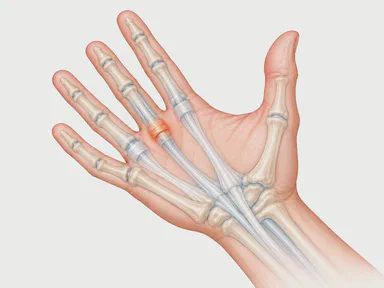
- Trigger finger Clicking, catching or locking of the finger when bending and straightening it, sometimes with a small painful lump in the palm.
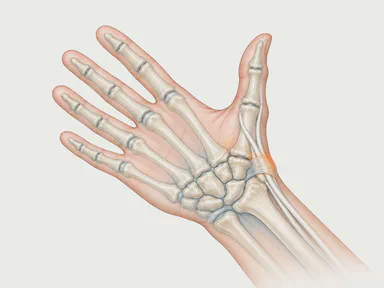
- De Quervain's Pain on the thumb side of the wrist when pinching, rotating or lifting weight, caused by irritation of the sheath around the thumb tendons.
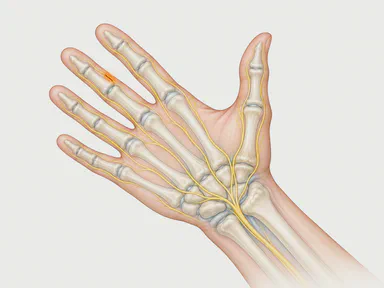
- Nerve injuries Section, compression or neuroma of the median, ulnar, radial or digital nerves, with loss of sensation or strength that may require microsurgery.
Sources and references
The information on this page is general and educational. It does not replace an individual medical assessment.
