

What are wrist ligament injuries?
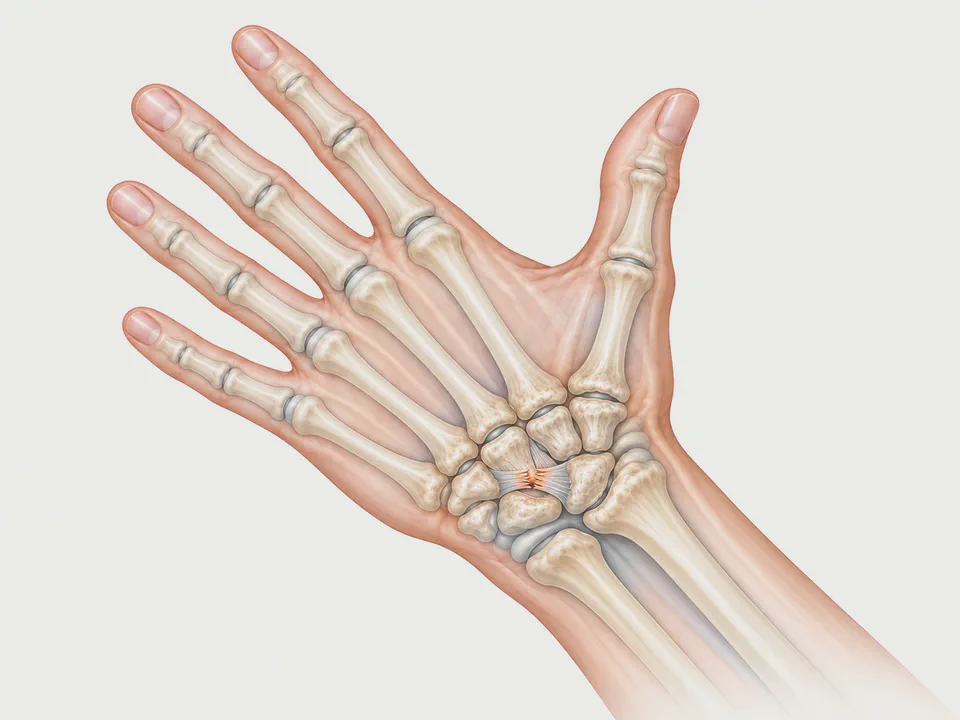
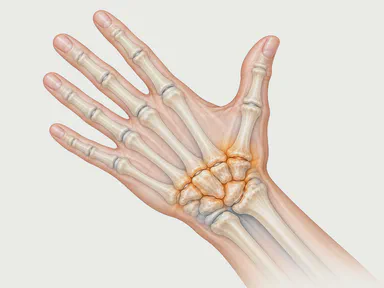
The wrist is made up of eight small bones, the carpal bones, joined to each other by a system of ligaments that lets them move in a coordinated way and transmit loads between the hand and the forearm. When one of these ligaments is stretched, partly torn, or completely torn, we speak of a wrist ligament injury.
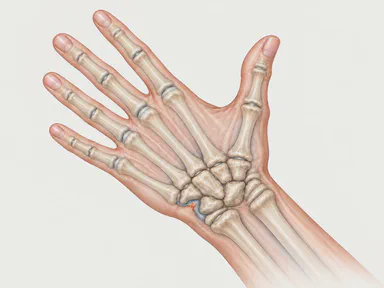
The two ligaments injured most often are the scapholunate, between the scaphoid and the lunate, and the lunotriquetral, between the lunate and the triquetrum. A complete rupture means the bones stop moving as a unit and the wrist becomes unstable: this is known as carpal instability. Over the years, this instability wears down the cartilage and can eventually lead to wrist osteoarthritis.
Symptoms
- Pain on the back of the wrist after a fall, more centrally located in a scapholunate injury and towards the little-finger side in a lunotriquetral injury.
- Swelling and pain when putting weight through the hand or pushing in extension, for example doing press-ups or getting up from a chair.
- Clicking or a sensation of catching when moving the wrist.
- Loss of grip strength.
- In chronic stages, progressive pain, stiffness, and sometimes a dorsal ganglion cyst appearing over the damaged ligament.
A sprain produces pain and swelling that improve within a few weeks. A rupture usually leaves persistent discomfort, even if the initial pain decreases.
Causes and risk factors
The most common cause is a fall onto an outstretched hand, with the wrist in hyperextension and ulnar deviation. They also occur in sporting accidents, when receiving an impact with the wrist under load, or when forcing a twist. They are frequently associated with a distal radius fracture or a scaphoid fracture, and can go unnoticed while attention is focused on the bone.
There are also degenerative injuries, caused by progressive wear of the ligament over the years, and injuries associated with inflammatory diseases.
Diagnosis
Examination looks for the exact point of pain and performs stress manoeuvres, such as the Watson test for the scapholunate ligament or the lunotriquetral ballottement test, always comparing with the opposite wrist.
X-rays, including clenched-fist views, show whether the space between the scaphoid and lunate has opened, or whether the bones have tilted, signs of a complete rupture. In early stages they can be normal. MRI, preferably with intra-articular contrast, helps visualise the ligament, and wrist arthroscopy is the definitive test: it allows the ligament to be seen, the injury graded, and treatment given during the same procedure.
Treatment
Sprains and stable partial injuries are treated with a splint for a few weeks, ice, pain control, and subsequent rehabilitation to regain mobility and strengthen the muscles that stabilise the wrist. In partial injuries with persistent pain, arthroscopic debridement or thermal shrinkage of the ligament can relieve symptoms.
When is surgery necessary?
Surgery is considered when:
- there is a complete rupture with instability shown on examination or imaging;
- pain and loss of strength persist after conservative treatment of a partial injury;
- the injury accompanies a fracture that already requires surgery;
- misalignment of the carpus is progressive and threatens to produce osteoarthritis.
Results are better when the ligament is repaired within the first few weeks, before its ends retract and the cartilage wears down.
Surgery for wrist ligament injuries
Surgical treatment depends on the ligament involved, how long the injury has been present, and the state of the cartilage:
- In recent ruptures, the ligament can be repaired directly with anchors and temporarily protected with wires, often arthroscopically or through small incisions, as part of minimally invasive surgery of the wrist.
- In chronic ruptures without osteoarthritis, the ligament is no longer repairable and is reconstructed with a tendon graft, or a capsulodesis is performed, using the joint capsule to limit the abnormal movement of the scaphoid.
- When osteoarthritis is already present, the priority shifts to relieving pain with the salvage techniques described on the wrist osteoarthritis page.
Recovery
After a ligament repair or reconstruction, the wrist is immobilised for around six to eight weeks, partly with protective wires that are removed at a consultation visit. Rehabilitation then begins to regain mobility and, later, strength. Return to loaded activities and sport usually takes several months, and it is common for the operated wrist to retain somewhat less mobility than the healthy side, in exchange for a stable and less painful joint.
Late diagnosis is the main enemy of these injuries. An untreated scapholunate rupture progresses over the years towards the pattern of osteoarthritis known as the SLAC wrist, which begins at the radial styloid and advances towards the rest of the joint.
Specialist in wrist ligament injuries in Barcelona
Dr Marta Martí Puente is a specialist in Orthopaedic Surgery and Traumatology with a focus on wrist surgery and arthroscopy. At her consultation in Barcelona she assesses each ligament injury individually, from a sprain that only needs a splint through to repair or reconstruction of the scapholunate ligament, and supports recovery through to a return to activity.
Frequently asked questions
How do I know if it is a sprain or a ligament rupture?
Can a scapholunate ligament rupture wait?
What is the SLAC wrist?
Can I have a torn ligament without having fallen?
Related conditions
- TFCC injury A frequent cause of pain on the little-finger side of the wrist, with clicking when rotating the forearm, after a fall or due to wear.
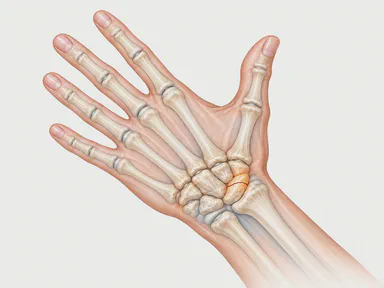
- Scaphoid fracture A fracture of the most vulnerable bone in the wrist: often not seen on the first X-ray, and if it fails to heal, it can lead to nonunion.
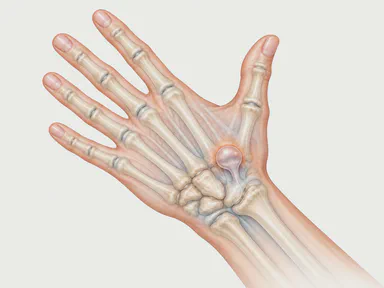
- Ganglion cyst A soft, benign, fluid-filled lump that arises from a joint or a tendon sheath, most often on the back of the wrist.
- Wrist osteoarthritis Wear of the wrist cartilage, almost always a consequence of an old fracture or ligament rupture, causing progressive pain and stiffness.
Sources and references
The information on this page is general and educational. It does not replace an individual medical assessment.
