

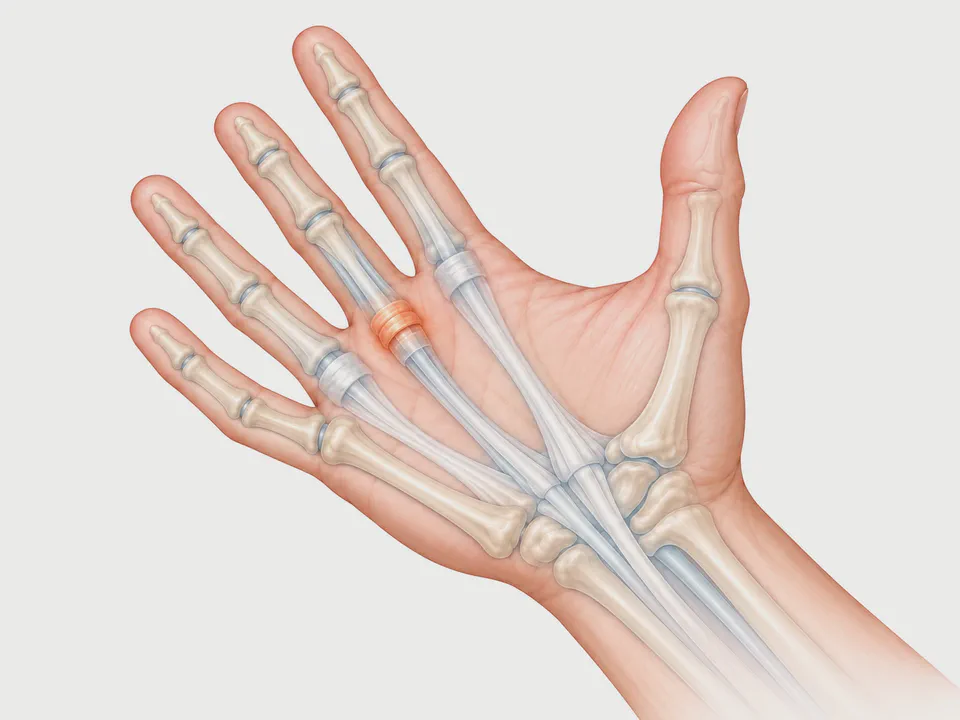
What is trigger finger?
Trigger finger, or stenosing flexor tenosynovitis, occurs when the flexor tendon does not glide normally through the pulley at the base of the finger, known as the A1 pulley. Pulleys are rings of tissue that hold the tendons close to the bone. If the pulley thickens or the tendon develops a nodule, the passage narrows and, on bending and straightening the finger, a click, a catching sensation, or even locking occurs.
It can affect any finger, although it is more common in the thumb, ring and middle fingers, and it is not unusual for it to appear in several fingers or both hands over time.
The pulley cyst
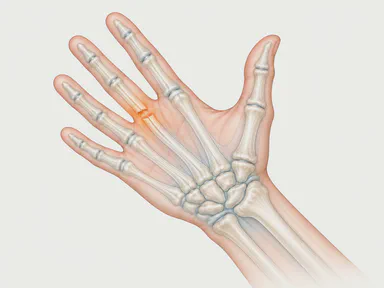
In some people the problem is accompanied by a pulley cyst, a small benign fluid-filled lump arising from the flexor tendon sheath in the same area. It feels like a firm, pea-sized lump at the base of the finger, and can hurt when gripping a bicycle handlebar or a tool handle. It is not always present, but when it appears it increases local pain and the sensation of an obstacle when moving the finger. It is a variant of the ganglion cyst of the hand.
Symptoms
Clicking or triggering when moving the finger
Many people describe the finger clicking or jumping as it straightens. At first this tends to be intermittent, and over time it becomes more frequent and more painful.
Locking and morning stiffness
In more advanced stages the finger can stay bent and need help from the other hand to straighten it. Stiffness is more marked in the morning and improves as the hand is used. In long-standing cases the finger can become fixed in flexion.
Pain at the base of the finger or a palmar lump
It is common to notice pain or tenderness in the palm, right at the base of the affected finger, where a nodule that moves with the tendon can sometimes be felt. If a pulley cyst is present, a small, rounded mass is felt that does not move on bending.
Causes and risk factors
The mechanism is related to local inflammation and increased thickness of the tendon or pulley. It can appear after a period of overuse, with repetitive gripping movements, or with no clear trigger. It is more common in women and between the ages of 40 and 60.
It is seen more often in people with diabetes, rheumatoid arthritis, hypothyroidism or a history of other trigger fingers, and is often associated with carpal tunnel syndrome. In young children there is a distinct form, congenital trigger thumb, which is treated differently from the adult condition.
Diagnosis
Diagnosis is clinical. On examination the painful point over the A1 pulley is located, the click on bending and straightening is confirmed, and whether the finger locks or has lost mobility is assessed.
When a lump is felt or there is doubt, ultrasound can confirm a pulley cyst, measure the thickness of the tendon, and distinguish it from other benign masses of the hand. X-rays are not usually needed unless a joint problem is suspected.
Treatment
In mild or recent-onset cases, treatment is conservative:
- relative rest from strong, repeated grips;
- a splint holding the finger in extension, especially at night, for a few weeks;
- anti-inflammatories for short periods, if indicated;
- corticosteroid injection into the tendon sheath, which relieves symptoms in many people and resolves them for good in some.
An isolated pulley cyst that causes little trouble can be monitored without treatment. If it hurts when gripping, aspiration can be attempted, although it tends to recur.
When is surgery necessary?
Surgery is considered when:
- the finger locks frequently or stays fixed in flexion;
- the injection has not worked or its effect was short-lived;
- the pulley cyst causes ongoing trouble or has recurred after aspiration;
- several fingers are affected, or there is an underlying condition, such as diabetes, in which injection is less effective.
A finger that has been locked for months can develop stiffness in the joints, so it is best not to delay the decision too long.
Trigger finger surgery
The procedure is trigger finger surgery: it involves opening the A1 pulley so the tendon can glide freely again. It is carried out under local anaesthetic, as day surgery, through a one to two centimetre incision in the palm, and during the same procedure the person is asked to move the finger to check the triggering has gone. If a pulley cyst is present, it is removed during the same operation. This is a simple and highly effective tendon surgery technique, with a low risk of complications when the digital nerves that run alongside the pulley are protected.
Recovery
The fingers move from the first day, since early movement prevents adhesions and stiffness. A light dressing is worn with periodic dressing changes until the stitches are removed, at around two weeks. The scar in the palm can be tender when pressed for a few weeks. Most people return to their usual activity within a few weeks, and if the finger was stiff before surgery, a period of exercises or hand therapy may be needed to regain full extension.
Specialist in trigger finger in Barcelona
Dr Marta Martí Puente is a specialist in Orthopaedic Surgery and Traumatology with a focus on hand surgery and the wrist. At her consultation in Barcelona she confirms whether it is trigger finger, a pulley cyst, or both, proposes the treatment suited to each stage, and performs surgery when indicated.
Frequently asked questions
Does trigger finger heal on its own?
Does the injection work?
What does trigger finger surgery involve?
What is a pulley cyst?
How long will I be unable to use my hand after the operation?
Related conditions
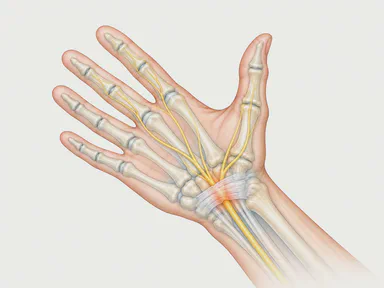
- Carpal tunnel Night-time tingling, numbness in the fingers and loss of strength caused by compression of the median nerve at the wrist.
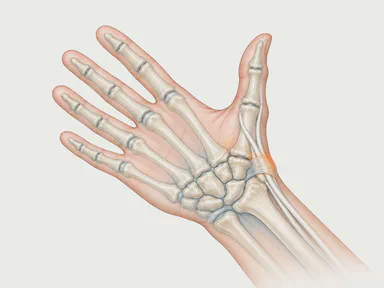
- De Quervain's Pain on the thumb side of the wrist when pinching, rotating or lifting weight, caused by irritation of the sheath around the thumb tendons.
- Tendon injuries Cuts, ruptures and detachments of the tendons that move the fingers: from mallet finger to deep wounds requiring urgent repair.
Sources and references
The information on this page is general and educational. It does not replace an individual medical assessment.
