

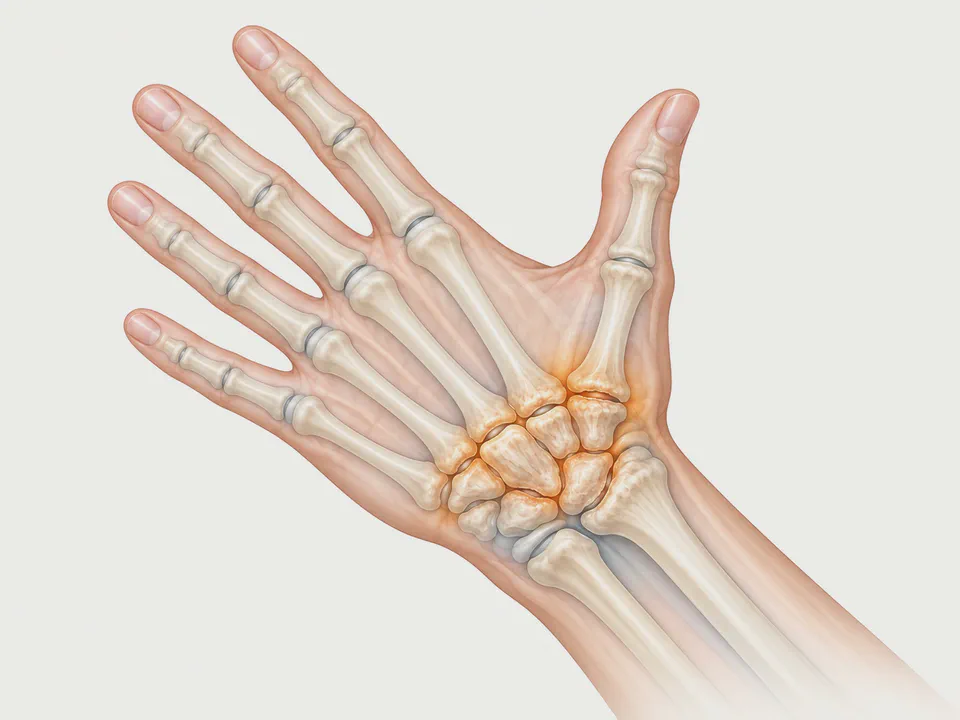
What is wrist osteoarthritis?
Wrist osteoarthritis is the wearing of the cartilage that lines the joint surfaces between the radius and the carpal bones, or between the carpal bones themselves. Without cartilage, the bones rub against each other, osteophytes form, and the joint becomes painful and stiff.
Unlike osteoarthritis of the hip or knee, wrist osteoarthritis rarely appears from the simple passage of years. In most cases it is post-traumatic: the consequence, often decades later, of an injury that altered the mechanics of the carpus. This is why it can affect relatively young and active people, and why its treatment differs from that of other joints.
Symptoms
- Pain in the wrist, at first with activity and later also at rest.
- Stiffness, especially in the morning, with progressive loss of flexion and extension.
- Swelling on the back of the wrist during flare periods.
- Loss of grip strength, with difficulty opening jars, carrying bags or putting weight through the hand.
- Clicking and a sensation of catching with certain movements.
Symptoms develop over years, with better and worse spells, and do not always correlate with the degree of wear seen on the X-ray.
Causes and risk factors
The most common causes are:
- Old rupture of the scapholunate ligament, which misaligns the scaphoid and wears down the joint in a stepwise pattern known as the SLAC wrist (scapholunate advanced collapse). This is described on the wrist ligament injuries page.
- Scaphoid nonunion, a scaphoid fracture that never healed and produces a similar pattern, the SNAC wrist.
- Distal radius fractures that healed with a step in the joint or in a poor position.
- Kienböck’s disease, necrosis of the lunate bone.
- Inflammatory diseases such as rheumatoid arthritis or crystal deposition.
In a minority of cases no previous cause is identified.
Diagnosis
X-rays are the basic test: they show the narrowing of the joint space, the osteophytes, the alignment of the carpal bones, and the sequelae of old injuries. They allow the stage of osteoarthritis to be classified, which guides the choice of treatment. CT gives detail on the state of each joint of the carpus, and MRI provides information on the cartilage, bone vitality and ligaments. In cases of doubt, wrist arthroscopy allows direct visualisation of the cartilage and helps decide the most suitable technique.
Treatment
Initial treatment is conservative and aims to reduce pain and maintain function:
- a wrist splint for activities that cause pain and during flares;
- adapting tasks, with aids to avoid loading the wrist in extension;
- analgesics or anti-inflammatories for short periods, if indicated;
- corticosteroid injection into the joint, with relief of variable duration;
- exercises to maintain mobility and strength without overloading the joint.
Many people live with wrist osteoarthritis for years with these measures and without needing surgery.
When is surgery necessary?
Surgery is considered when pain limits daily life or work despite conservative treatment, or when deformity and stiffness progress. There is no single operation for wrist osteoarthritis: the choice depends on the pattern of wear, which joints still retain cartilage, age, activity level, and each person’s priorities, especially the balance between preserving mobility and eliminating pain.
Surgery for wrist osteoarthritis
Techniques are ranked from least to greatest sacrifice of mobility:
- Wrist denervation: the small nerve branches that transmit pain from the joint are cut, without touching the bone. It preserves mobility and does not close the door to other surgeries, although relief may be partial or temporary. It can be performed through small incisions as part of minimally invasive surgery.
- Proximal row carpectomy: the scaphoid, lunate and triquetrum are removed, and the capitate bone comes to articulate with the radius. It maintains a useful arc of movement and is indicated when the cartilage of the capitate and the lunate fossa is preserved.
- Partial arthrodesis: the scaphoid is removed and the four remaining carpal bones are fused together (four-corner fusion), or only two bones are fused. It eliminates pain from the worn joints while preserving movement between the radius and lunate.
- Total arthrodesis: the wrist is fused with a plate. It is the safest option to eliminate pain and restore strength in advanced osteoarthritis and in people with heavy manual work, at the cost of losing flexion and extension of the wrist.
- Wrist prosthesis: replaces the joint while preserving mobility. Its indication is limited to people with low physical demands, because its durability is lower than that of other prostheses, and it is considered with caution.
When osteoarthritis is the result of a poorly healed fracture, correcting the alignment of the radius with an osteotomy, as part of surgery for hand and wrist fractures, can slow down wear in early stages.
Recovery
This depends greatly on the technique used. After denervation, recovery is quick and the wrist is moved within a few days. After a carpectomy or partial arthrodesis, the wrist is immobilised for several weeks while the tissues heal or the fusion consolidates, after which rehabilitation restores the available movement and strength; the final result takes several months. After a total arthrodesis, consolidation takes between two and three months, and most people adapt well to a fixed, pain-free wrist, with forearm rotation and finger movement preserved. Realistic expectations for each option are explained in detail before deciding.
Specialist in wrist osteoarthritis in Barcelona
Dr Marta Martí Puente is a specialist in Orthopaedic Surgery and Traumatology with a focus on wrist surgery and the hand. At her consultation in Barcelona she assesses each case of wrist osteoarthritis individually, from conservative measures through to denervation, carpectomy or arthrodesis when indicated, and supports recovery through to a return to usual activity.
Frequently asked questions
Why do I have wrist osteoarthritis if I'm young?
What do SLAC and SNAC mean?
Will I lose mobility if I have an arthrodesis?
Is there such a thing as a wrist prosthesis?
Related conditions
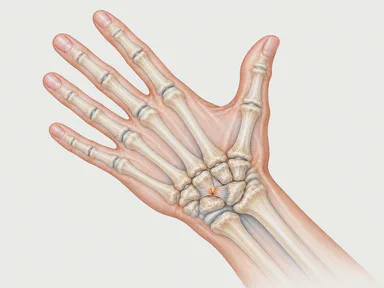
- Wrist ligaments Sprains and ruptures of the ligaments joining the carpal bones, especially the scapholunate ligament, which can destabilise the wrist and lead to osteoarthritis.
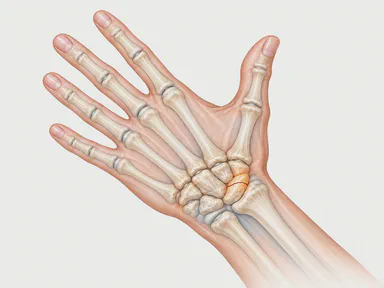
- Scaphoid fracture A fracture of the most vulnerable bone in the wrist: often not seen on the first X-ray, and if it fails to heal, it can lead to nonunion.
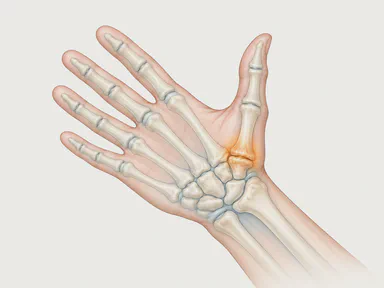
- Thumb base arthritis Pain and loss of strength at the base of the thumb caused by wear of the trapeziometacarpal joint.
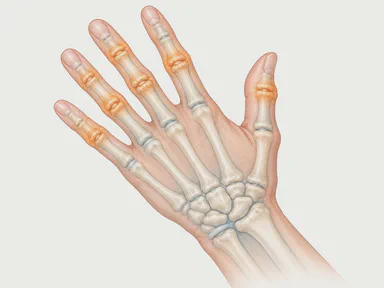
- Finger osteoarthritis Pain, stiffness and nodes in the finger joints caused by cartilage wear, especially in the joints closest to the nail.
Sources and references
The information on this page is general and educational. It does not replace an individual medical assessment.
