
Specialty
Wrist surgery in Barcelona
Fractures, ligament injuries, TFCC, ganglion cysts and wrist arthritis, treated with open or arthroscopic surgery depending on the case.

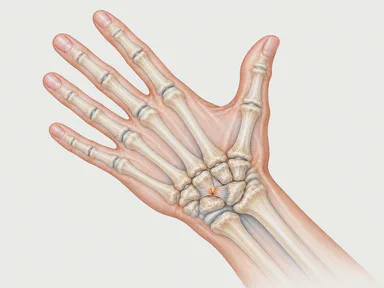
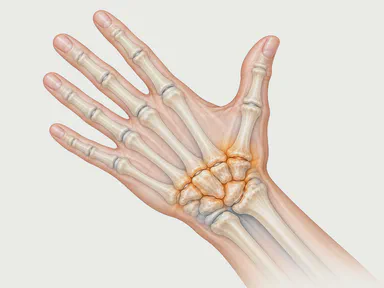
The wrist is the joint that connects the hand to the forearm and makes it possible to orient the hand in space. It is made up of eight small carpal bones, the end of the radius and ulna, a complex network of ligaments and the triangular fibrocartilage complex (TFCC). Its stability depends on a very fine balance, which is why wrist injuries require an accurate diagnosis.
Dr Marta Martí Puente treats traumatic, degenerative and sports-related injuries of the wrist, with specific training in wrist arthroscopy, carpal instability and surgical treatment of fractures.
From a sprain that will not heal to a complex fracture
Many wrist consultations start with a “sprain” that never quite heals. Behind it there may be a ligament injury, a scaphoid fracture that went unnoticed, or a TFCC injury. Identifying it in time avoids after-effects such as instability or arthritis. At the other end of the scale, distal radius fractures are the most common in adults and can be treated with a cast or with surgery depending on the type of fracture and each person’s needs.
Open and arthroscopic surgery
Arthroscopy allows many wrist injuries to be diagnosed and treated through incisions just a few millimetres long, with less post-operative pain and a faster recovery. When the injury requires open repair, as with displaced fractures or some ligament reconstructions, stable fixation techniques are used that allow early movement.
Wrist surgery in Barcelona
You can consult Dr Martí Puente at Hospital El Pilar, Centre Mèdic AXA and the Àptima centres in Sabadell and Terrassa. Book an appointment at whichever centre you prefer.
Conditions
Wrist conditions treated
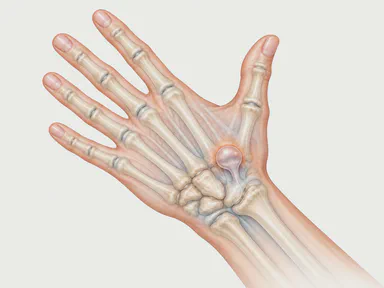
- Ganglion cyst A soft, benign, fluid-filled lump that arises from a joint or a tendon sheath, most often on the back of the wrist.
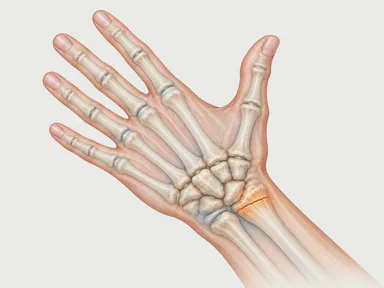
- Distal radius fracture The most common wrist fracture: it occurs on falling onto an outstretched hand and can be treated with a cast or with surgery depending on the displacement.
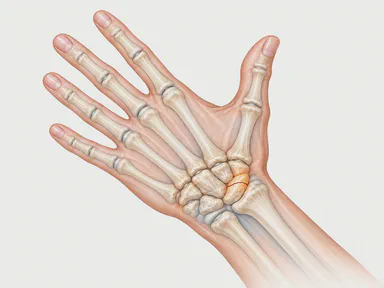
- Scaphoid fracture A fracture of the most vulnerable bone in the wrist: often not seen on the first X-ray, and if it fails to heal, it can lead to nonunion.
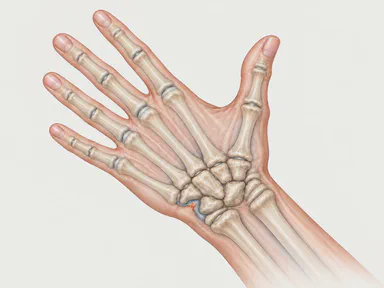
- TFCC injury A frequent cause of pain on the little-finger side of the wrist, with clicking when rotating the forearm, after a fall or due to wear.
- Wrist ligaments Sprains and ruptures of the ligaments joining the carpal bones, especially the scapholunate ligament, which can destabilise the wrist and lead to osteoarthritis.
- Wrist osteoarthritis Wear of the wrist cartilage, almost always a consequence of an old fracture or ligament rupture, causing progressive pain and stiffness.
Treatments
Wrist surgery treatments
- Wrist arthroscopyA technique that allows the inside of the wrist to be examined and treated through incisions of a few millimetres, for both diagnostic and therapeutic purposes.
- Minimally invasive surgeryTechniques with small incisions, local anaesthesia and a day-case regime that reduce surgical disruption when the injury allows it.
- Fracture surgeryFixation of distal radius, scaphoid, metacarpal and phalangeal fractures with plates, screws, wires or an external fixator when a cast is not enough.
Frequently asked questions
What is wrist arthroscopy?
My wrist hurts without having been knocked. Is that a reason to see someone?
Does a wrist fracture always need surgery?
Do you have a hand or wrist problem?
Book an appointment with Dr Marta Martí Puente for a specialist assessment.
