

As a general guide, the bone in a wrist fracture usually takes between six and eight weeks to heal in an adult, but regaining movement and strength takes longer: it is common to need between three and six months to return to usual activities without limitations, and improvement can continue for up to a year. These timeframes vary considerably depending on the type of fracture, the treatment, age and how consistently the exercises are done, so they should be treated as a guide rather than a promise.
What follows is general information. The timeframes for your specific case can only be estimated by those following you, with the X-rays in front of them.
What actually breaks when you “break your wrist”
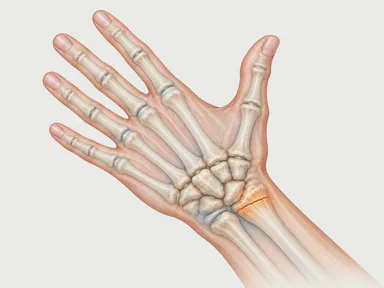
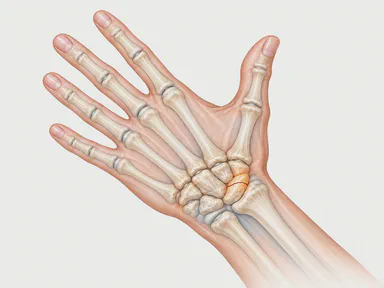
Most wrist fractures are fractures of the distal radius, the end of the forearm bone that forms the joint, almost always after a fall onto the hand. The second most common is a fracture of the scaphoid, one of the small carpal bones, which has its own timeframes and particular features. We will mainly discuss distal radius fractures, but will also cover the scaphoid in a section of its own.
Stage 1: immobilisation
Without surgery
When the fracture is well aligned, or can be positioned well with manipulation, it is treated with a cast or splint. In an adult, immobilisation usually lasts between four and six weeks, with follow-up X-rays to check the fragments are not moving. During this time it is important to move the fingers, elbow and shoulder so they do not stiffen up, and to keep the hand raised for the first few days to reduce swelling.
With surgery
When the fracture is displaced, unstable, or affects the joint surface, it is fixed with surgery for hand and wrist fractures, usually using a plate and screws. The main advantage is that the fixation is stable from day one, which allows rigid immobilisation to be shortened to one or two weeks and mobility exercises to begin sooner. This does not mean the bone heals faster: it still needs its weeks, but the wrist reaches the end of that period less stiff.
Stage 2: regaining movement
When the cast or splint is removed, it is normal to find the wrist stiff, weak and somewhat swollen, with dry skin and a certain sense of insecurity. This stage surprises many people, who expected a hand that felt “like before” once the cast came off.
Over the following four to eight weeks, exercises for flexion, extension and forearm rotation, with or without physiotherapy depending on the case, restore most of the range of movement. Light activities (getting dressed, cooking, writing, driving short distances) are resumed progressively during this stage, generally once the bone has healed and the pain allows it.
Stage 3: regaining strength
Grip strength is the last thing to come back. It usually needs three to six months of progressive work, and in older people or complex fractures it can take longer. Loading activities (lifting weights, contact sports, putting full body weight through the hand) are resumed once healing is complete on X-ray and the wrist has sufficient strength and movement, which is decided at follow-up reviews.
Some discomfort with changes in the weather, or at the end of a demanding day, is common during the first year. This is not usually a concern if function is otherwise good.
The particular case of the scaphoid
The scaphoid fracture has a delicate blood supply and heals more slowly. When treated with a cast, immobilisation is usually six to eight weeks and can be extended if follow-up X-rays or a CT scan show healing is not complete. With surgical screw fixation, immobilisation is shortened, but the bone still needs its time. Here it is especially important to keep up with follow-up, because a scaphoid fracture that fails to heal can cause problems years later.
What can prolong recovery
Some factors make the timeframes stretch out:
- Complex fractures, or those with several fragments, particularly if they affect the joint.
- Older age and osteoporosis, which slow healing.
- Smoking and poorly controlled diabetes.
- Stiffness from not moving the fingers and shoulder during immobilisation.
- Associated injuries to the wrist ligaments or the triangular fibrocartilage, which sometimes explain pain that persists once the bone has already healed.
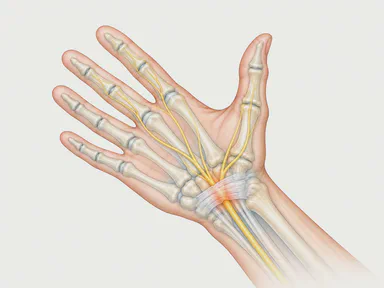
- Complications such as tendon irritation from the plate, or carpal tunnel syndrome appearing after the fracture, with tingling in the fingers, which sometimes requires treatment of its own.
- Complex regional pain syndrome, uncommon, which presents with disproportionate pain, swelling and changes in skin colour, and needs specific, early management.
What you can do to help recovery go better
Moving whatever is not immobilised from day one, keeping the hand raised at the start, doing the exercises you are given consistently, not smoking, and attending follow-up reviews are the measures that make the most difference. The wrist should not be forced before its time, nor, at the other extreme, left unused out of fear once the cast has been removed.
When should you see a specialist?
Besides the scheduled reviews, it is worth seeking advice if the pain increases rather than easing, if tingling appears in the fingers, if you notice the fingers swelling, changing colour or becoming very stiff, or if, three or four months after the fracture, the wrist is still very limited. Also if you have an old fracture that “did not heal well” and is causing pain or deformity.
You can find out more on the pages about distal radius fracture and scaphoid fracture. If you would like an assessment with Dr Marta Martí Puente at her practice in Barcelona, you can get in touch via the contact page.
Frequently asked questions
How long is a cast worn for a wrist fracture?
When will I be able to return to work after a wrist fracture?
Is it normal for the wrist to still be stiff months after the fracture?
Related conditions
- Distal radius fracture The most common wrist fracture: it occurs on falling onto an outstretched hand and can be treated with a cast or with surgery depending on the displacement.
- Scaphoid fracture A fracture of the most vulnerable bone in the wrist: often not seen on the first X-ray, and if it fails to heal, it can lead to nonunion.
- Carpal tunnel Night-time tingling, numbness in the fingers and loss of strength caused by compression of the median nerve at the wrist.
Sources and references
The information on this page is general and educational. It does not replace an individual medical assessment.
