

Yes, the wrist can hurt without any fall or knock having happened, and in fact this is the most common presentation seen in clinic. When there is no clear injury, the most frequent causes are overload of the tendons around the joint, a synovial cyst, joint wear (osteoarthritis) and, less often, an old ligament injury that was interpreted at the time as a simple sprain. The location of the pain, the movement that triggers it and how long it has been going on all help to narrow things down.
This article is general information and does not replace an individual assessment. Its aim is to help you understand what might be going on and when it makes sense to seek advice.
Where it hurts tells you a lot
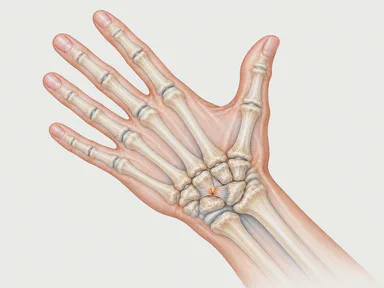
The wrist is a complex joint, with eight small bones, several ligaments and many tendons passing through it. That is why the first useful piece of information is the location:
- Thumb side (radial border): think of tendinitis of the thumb tendons or arthritis at the base of the thumb.
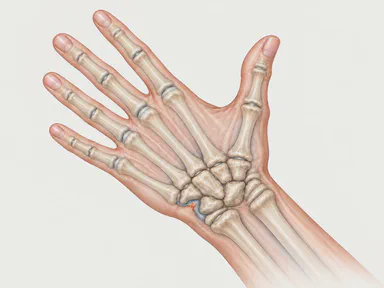
- Little-finger side (ulnar border): this suggests involvement of the triangular fibrocartilage or the joint between the radius and ulna.
- Back of the wrist: most synovial cysts and some central ligament injuries appear here.
- Palm side: more often related to flexor tendons or nerve compressions, which tend to come with tingling.
Tendinitis and overload
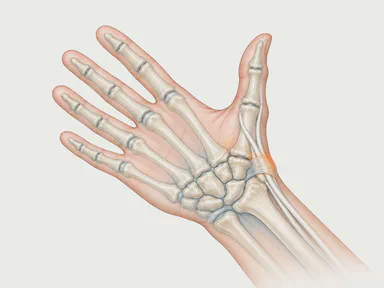
This is the most common cause of wrist pain with no injury. It is usually linked to repetitive movements: typing, using a mouse, picking up a baby, manual tasks or racquet sports. De Quervain’s tenosynovitis is the best-known example: pain on the edge of the wrist next to the thumb, worsening when turning the hand or lifting weight with the thumb extended.
The typical symptoms of tendon overload are pain on moving in a particular direction, tenderness on pressing along the tendon’s path, and some local swelling. In general it responds well to relative rest, a splint and simple measures, although if it becomes long-standing it can need an injection or, in certain cases, surgery.
Synovial cyst
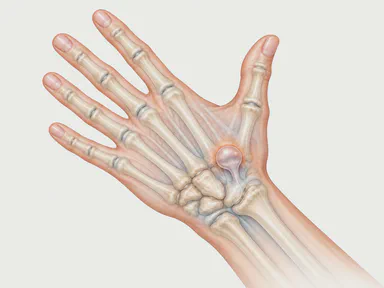
A synovial cyst, also called a ganglion, is a soft, fluid-filled lump that forms from the joint capsule or a tendon sheath. The most common one appears on the back of the wrist. Sometimes a clear lump is felt; other times the cyst is small and deep, cannot be seen, and all it causes is a dull ache when putting weight on the hand or extending the wrist.
Many cysts are painless and need no treatment. When they cause persistent discomfort, limit movement, or another cause needs to be ruled out, they are investigated with ultrasound or MRI and the most suitable treatment is considered.
Wrist osteoarthritis
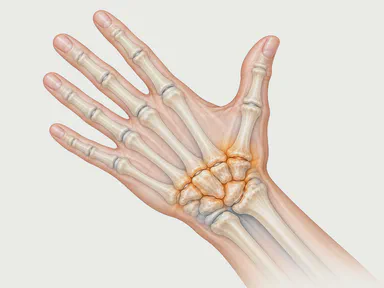
Wrist osteoarthritis causes a more constant pain, with stiffness on waking and a progressive loss of movement and strength. It can appear with age, but in the wrist it is often the consequence of an old injury: a scaphoid fracture that did not heal well, or a ligament tear that changed the way the bones articulate with each other.
For this reason, when wrist pain has lasted for months in someone who recalls a sprain “that never quite healed properly”, it is worth getting an X-ray rather than simply putting it down to overuse.
Ligament injuries that went unnoticed
Not every ligament injury comes from a hard knock. A fall onto the hand years ago, a twist while playing sport, or even a sudden movement can injure the wrist ligaments or the triangular fibrocartilage (TFCC) without a precise diagnosis being made at the time. Over time, the injured ligament stops stabilising the joint properly, and pain develops that becomes more pronounced when loading the wrist, rotating the forearm or gripping forcefully.
These injuries are suspected on examination and confirmed with imaging. In some cases, when doubt remains or treatment is being considered, wrist arthroscopy allows the inside of the joint to be seen directly and the injury treated in the same procedure.
Other causes worth bearing in mind
Although less common, there are other situations that can cause wrist pain with no trauma:
- Nerve compressions, such as carpal tunnel syndrome, which tend to come with tingling in the fingers.
- Inflammatory conditions, such as rheumatoid arthritis, which affect several joints and present with swelling and prolonged morning stiffness.
- Bone circulation disorders, which are uncommon and diagnosed with MRI.
- Referred pain from the elbow or neck.
What can you do in the meantime?
If the pain is recent and mild, it is reasonable to reduce the activity that triggers it, apply local cold for a few minutes several times a day, and use a simple splint for a few days. Avoid forcing the wrist with painful loads or twisting movements. If you need medication, check with your doctor or pharmacist, particularly if you take other treatments.
What is not advisable is letting pain that is not improving carry on for months without knowing its cause. Treating everything as “tendinitis” delays the diagnosis of problems that are managed better the sooner they are addressed.
When should you see a specialist?
Seek an assessment if the pain lasts more than two or three weeks despite rest, if you notice a lump, if you lose strength or movement, if the pain wakes you at night, or if there is swelling that does not settle. Also if you recall an old fall onto the hand and the wrist has never quite been right since.
You can find out more on the pages for each of the conditions mentioned, for example TFCC injury, one of the causes of ulnar-sided pain that most often goes unnoticed. If you would like Dr Marta Martí Puente to assess your case in clinic, you can get in touch via the contact page.
Frequently asked questions
Can the wrist hurt without any injury at all?
What test do I need to find out why my wrist hurts?
Should I immobilise my wrist if it hurts?
Related conditions
- TFCC injury A frequent cause of pain on the little-finger side of the wrist, with clicking when rotating the forearm, after a fall or due to wear.
- Ganglion cyst A soft, benign, fluid-filled lump that arises from a joint or a tendon sheath, most often on the back of the wrist.
- De Quervain's Pain on the thumb side of the wrist when pinching, rotating or lifting weight, caused by irritation of the sheath around the thumb tendons.
- Wrist osteoarthritis Wear of the wrist cartilage, almost always a consequence of an old fracture or ligament rupture, causing progressive pain and stiffness.
- Wrist ligaments Sprains and ruptures of the ligaments joining the carpal bones, especially the scapholunate ligament, which can destabilise the wrist and lead to osteoarthritis.
Sources and references
The information on this page is general and educational. It does not replace an individual medical assessment.
