

The short answer: a scaphoid fracture needs surgery when it is displaced, when it affects the proximal part of the bone (the part closest to the forearm, which has a poorer blood supply), when it is associated with other injuries to the wrist, when it has gone undiagnosed for some time and fails to heal, or when the person needs to regain function quickly and would rather avoid prolonged immobilisation. Non-displaced fractures of the waist, which are the most common, are usually treated with immobilisation and heal in most cases.
This information is general. The decision in each case depends on the X-ray, further tests and each person’s individual circumstances.
Why the scaphoid is a special bone
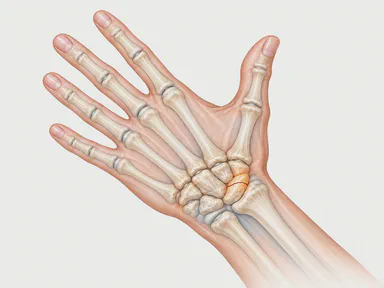
The scaphoid is one of the eight small bones of the carpus and the one that fractures most often, almost always from a fall onto an outstretched hand. It has one particular feature: its blood supply enters at the distal end and runs towards the proximal end. This means that fractures of the proximal part carry a higher risk that the fragment will lose its blood supply and fail to heal properly.
The scaphoid is also a key piece of wrist stability. If it heals in a poor position, or fails to heal at all, the rest of the carpal bones become misaligned and, over the years, wrist osteoarthritis develops that no longer has a simple solution.
The first problem: diagnosing it
A scaphoid fracture can go unnoticed. The pain is sometimes moderate, the wrist does not become deformed, and the initial X-ray can be normal in a considerable proportion of cases. The classic sign is pain on pressing the anatomical snuffbox, the hollow that forms on the back of the wrist, next to the thumb, when it is extended.
When there is pain in that area after a fall and the X-ray shows nothing, the prudent approach is to immobilise the wrist as though there were a fracture and repeat the X-ray after ten to fifteen days, or to request an MRI or CT scan directly, since these detect the fracture sooner. It is worth distinguishing this from a distal radius fracture, which is much more common and treated differently.
Fractures usually treated without surgery
Treatment with immobilisation is considered when the fracture:
- affects the waist or distal third of the scaphoid;
- is not displaced or angulated;
- is diagnosed early, within the first few days after the fall;
- is not accompanied by other ligament or bone injuries.
In these cases a cast or splint that includes the wrist is applied, generally for around six to eight weeks, with periodic X-ray checks. If there is doubt about healing at the end of that period, a CT scan is requested, which shows the bone in more detail. It is important to know that immobilisation can be extended, and that during this time the hand loses strength and movement, which are then regained through exercises.
Fractures that usually need surgery
Surgical fixation, as part of surgery for hand and wrist fractures, is recommended when any of the following circumstances apply:
- Displacement of the fragments, even by just a few millimetres, or angulation of the bone.
- A fracture of the proximal pole, due to its higher risk of nonunion.
- Associated injuries, such as dislocation of the carpal bones or a significant ligament tear.
- Delayed diagnosis, when weeks have passed and the fracture already shows signs of failing to heal.
- Established nonunion, that is, an old fracture that never healed.
Surgery can also be offered for non-displaced fractures to people who, because of their work or sporting activity, prefer an earlier functional recovery rather than two months in a cast. This is a shared decision that requires the advantages and risks of each option to be explained clearly.
What the procedure involves
The most common technique is fixation with a compression screw, which is inserted along the length of the scaphoid to hold the fragments together while they heal. In recent, minimally displaced fractures this can be done percutaneously, through a very small incision, sometimes with the help of wrist arthroscopy to check the reduction and assess the ligaments.
When the fracture is old and has not healed, surgery is more complex: the fracture site is cleaned, a bone graft is added (sometimes with its own blood vessel, using microsurgical techniques) and the fragments are fixed. The longer the nonunion has been present and the more deformity there is, the harder it becomes to restore a normal wrist.
After surgery
After fixation, a splint is usually worn for a shorter period than with conservative treatment, and mobility exercises begin early. Even so, the bone still needs its weeks to heal, and loading activities or sport are resumed once follow-up X-rays allow it. The specific timeframes vary according to the type of fracture and procedure, and are adjusted at each review.
When should you see a specialist?
If you have fallen onto your hand and your wrist hurts next to the thumb, particularly on pressing the anatomical snuffbox, it is worth being seen even if the X-ray taken in A&E was normal. And if you have a wrist that “never properly healed” after an old fall, with pain and loss of movement, it is worth having it investigated: the sooner a nonunion is treated, the better the options.
You can find out more on the page about scaphoid fracture. For an assessment with Dr Marta Martí Puente, hand and wrist surgeon in Barcelona, you can get in touch via the contact page.
Frequently asked questions
Can a scaphoid fracture fail to show up on the X-ray?
What happens if a scaphoid fracture is left untreated?
How long is a cast worn for a scaphoid fracture?
Related conditions
- Scaphoid fracture A fracture of the most vulnerable bone in the wrist: often not seen on the first X-ray, and if it fails to heal, it can lead to nonunion.
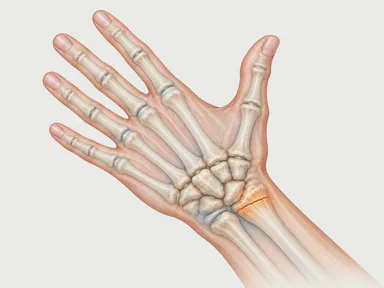
- Distal radius fracture The most common wrist fracture: it occurs on falling onto an outstretched hand and can be treated with a cast or with surgery depending on the displacement.
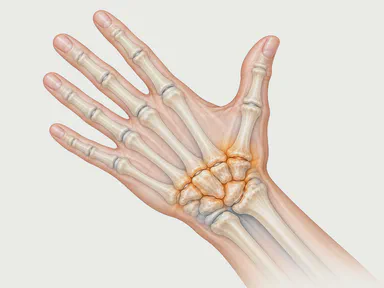
- Wrist osteoarthritis Wear of the wrist cartilage, almost always a consequence of an old fracture or ligament rupture, causing progressive pain and stiffness.
Sources and references
The information on this page is general and educational. It does not replace an individual medical assessment.
